
Dholakia Lab Grown Diamond Funding: ₹800 Cr to Scale D2C
Company Raises ₹800+ Crore to Scale D2C Retail and Deep-Tech Manufacturing
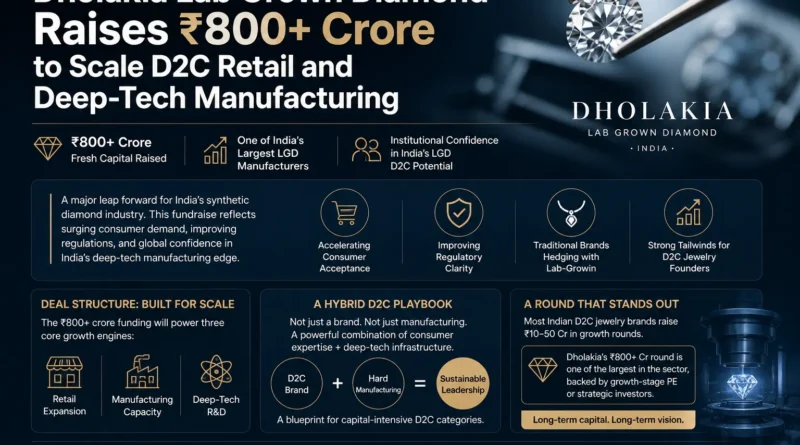
One of India’s largest LGD manufacturers, Dholakia Lab Grown Diamond, has secured over ₹800 crore in fresh capital, marking a significant inflection point for the country’s synthetic diamond industry. Dholakia Lab Grown Diamond’s fundraise signals institutional confidence in the sector’s D2C potential and India’s manufacturing competitiveness against global players.
The dholakia lab grown diamond funding round comes at a time when consumer acceptance of lab-grown diamonds is accelerating, regulatory clarity is improving, and traditional jewelry brands are hedging their bets on synthetic alternatives. For D2C founders in the jewelry and lifestyle space, this deal offers critical insights into capital deployment, omnichannel strategy, and vertical integration.
Deal Structure and Investor Profile
While specific investor names remain undisclosed at the time of reporting, the ₹800+ crore round represents one of the largest capital infusions in India’s lab-grown diamond sector. The funding is structured to support three core pillars: retail expansion, manufacturing capacity, and deep-tech R&D.
Unlike typical D2C rounds that prioritize marketing spend and customer acquisition, this capital allocation reflects a hybrid model—combining consumer brand building with hard manufacturing infrastructure. This approach is increasingly common among D2C brands entering capital-intensive categories like jewelry, furniture, and electronics.
The size of the round also indicates participation from growth-stage PE funds or strategic investors with long-term horizons, rather than early-stage VC firms focused on quick exits. For context, most Indian D2C jewelry brands raise between ₹10-50 crore in growth rounds, making Dholakia’s fundraise an outlier.

Retention Marketing Strategies for D2C Brands: How to Turn One-Time Buyers into Lifetime Customers
Zepto and Blinkit Expansion: The Race to 2,000 Dark Stores in 2026
How to Reduce CAC (Customer Acquisition Cost) : A guide for D2C brands in India

Frido Opens First Mumbai Store: An Education-Led D2C Retail Model

Why Consumers Are Ready to Pay More and What It Means for D2C Brands

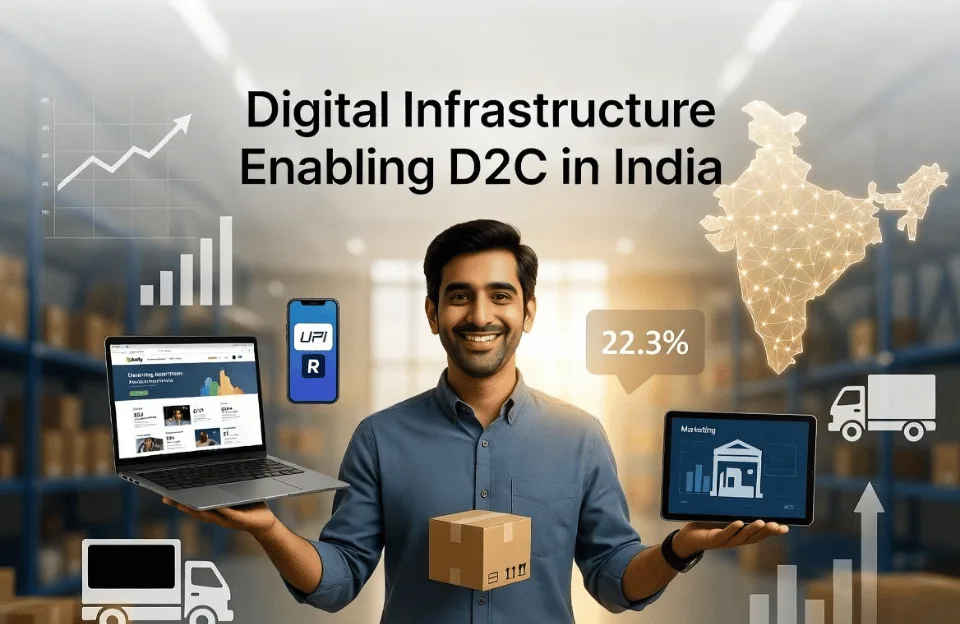
Digital Infrastructure Enabling D2C in India: The 7 Pillars That Made It All Possible
Strategic Use of Capital: Three-Pronged Expansion
Manufacturing Scale-Up
Dholakia Lab Grown Diamond plans to deploy a significant portion of the capital toward expanding its Chemical Vapor Deposition (CVD) and High Pressure High Temperature (HPHT) manufacturing facilities. India currently produces approximately 15-18% of global lab-grown diamond output, trailing China’s 50%+ market share.
Scaling manufacturing capacity serves dual purposes: reducing per-unit costs and securing supply chain control. For D2C brands, vertical integration in manufacturing translates to better margins, faster product iteration, and protection against supply shocks—lessons learned during the pandemic.
The move also positions Dholakia as a B2B supplier to other D2C jewelry brands, creating a revenue stream independent of consumer volatility. This playbook mirrors what companies like Urban Ladder (furniture manufacturing) and Lenskart (lens production) have executed.
D2C Retail Expansion
The company is expanding its direct-to-consumer retail footprint across tier-1 and tier-2 cities. This includes both owned stores and shop-in-shop formats within multi-brand outlets. The omnichannel approach addresses a critical challenge in jewelry D2C: high consideration purchases still require physical touchpoints.
Recent data suggests that 70-75% of jewelry purchases in India still happen offline, even when research begins online. Dholakia’s retail expansion acknowledges this reality while capturing higher margins compared to wholesale distribution.
For D2C founders, the implication is clear: in high-value, low-frequency categories, blended CAC (Customer Acquisition Cost) across online and offline channels often yields better unit economics than pure-play digital.
Deep-Tech and R&D Investment
A portion of the funding is earmarked for R&D in diamond grading technology, traceability systems, and production efficiency. Lab-grown diamonds face persistent challenges around consumer education and differentiation from natural diamonds.
Investments in certification infrastructure and blockchain-based traceability could become competitive moats, particularly as greenwashing concerns grow. For the broader D2C ecosystem, this highlights an emerging trend: technology investments that enhance product credibility and transparency are becoming table stakes, not differentiators.

Market Context: Why Lab-Grown Diamonds Now?
Regulatory Tailwinds
The Indian government has actively supported the lab-grown diamond sector through policy interventions. Import duties on LGD seeds and machinery have been reduced, and the sector has been granted infrastructure status in some states. This creates a favorable environment for manufacturing-led D2C models.
Consumer Sentiment Shift
Lab-grown diamonds now command 8-10% of the global diamond jewelry market, up from less than 3% five years ago. In India, adoption is faster among millennials and Gen-Z consumers who prioritize sustainability narratives and value propositions—LGDs typically cost 40-60% less than natural diamonds of equivalent quality.
Competitive Pressure
Global players like Pandora, Signet Jewelers, and De Beers (through its Lightbox brand) have entered the LGD space. Indian D2C brands like Grown Diamond Corporation, Limelight, and others are also scaling. Dholakia’s capital raise is partly defensive, ensuring it doesn’t lose ground to well-funded competitors.
Implications for D2C Founders and Operators
Capital-Intensive D2C Models Are Viable
This deal challenges the prevailing narrative that D2C brands must be asset-light. In categories with fragmented supply chains and quality inconsistencies, vertical integration can create sustainable competitive advantages. However, this requires patient capital and longer payback periods.
Omnichannel Is Non-Negotiable in High-Value Categories
Dholakia’s retail expansion underscores that digital-first doesn’t mean digital-only. For D2C brands in jewelry, furniture, eyewear, and similar categories, physical retail serves as both a revenue channel and a trust-building mechanism.
Manufacturing as a Moat
Owning production capacity allows brands to control quality, margins, and innovation cycles. For founders evaluating make-vs-buy decisions, this deal suggests that in commoditizing categories, manufacturing can be a strategic differentiator.