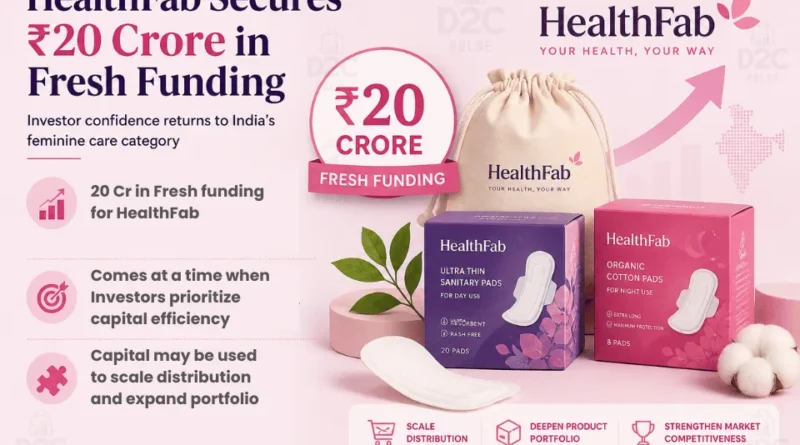
HealthFab Funding: ₹20 Cr to Scale Menstrual Hygiene D2C
HealthFab, a D2C menstrual hygiene brand, has secured ₹20 crore in fresh funding, signaling renewed investor interest in India’s feminine care category despite a cautious funding environment. The HealthFab funding India round comes at a time when investors evaluate D2C brands less on GMV hockey sticks and more on their path to profitability and capital efficiency.
While the company has not disclosed the investor names or the funding structure, this capital infusion positions HealthFab to scale distribution, deepen its product portfolio, and compete in a market that’s witnessing both consolidation and fragmentation simultaneously.
Why This Funding Round Matters
Legacy FMCG players have historically dominated the menstrual hygiene category in India, like P&G (Whisper), Johnson & Johnson (Stayfree), and Kimberly-Clark (Kotex). However, the last five years have seen a wave of D2C challengers—from Sirona and Nua to Pee Safe and now HealthFab. These new age brands are attempting to capture mindshare among urban, digitally native consumers.
HealthFab funding of ₹20 crore is significant for three reasons:
First, it validates the thesis that feminine hygiene is moving beyond commoditization. Consumers are willing to pay a premium for brands that offer better materials, sustainable options, or address specific pain points like rashes, leakage, or comfort. This opens up margin opportunities that traditional FMCG players have struggled to capture.
Second, it reflects investor confidence in category-focused D2C brands. Unlike horizontal marketplaces or multi-category D2C plays, brands that own a single vertical deeply—especially in underserved categories like menstrual health—are attracting capital because they can build defensible moats through product innovation and community.
Third, the funding comes at a time when D2C brands are being forced to prove offline viability. Pure-play online brands are hitting CAC ceilings. HealthFab’s ability to raise capital likely signals either strong unit economics online or a credible omnichannel expansion plan.
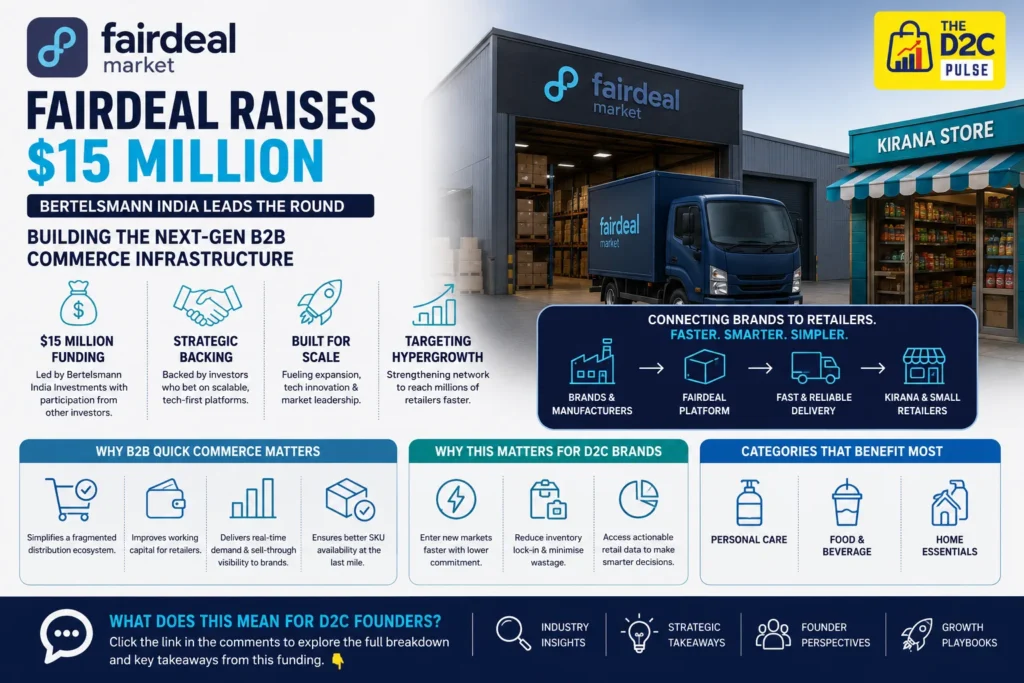
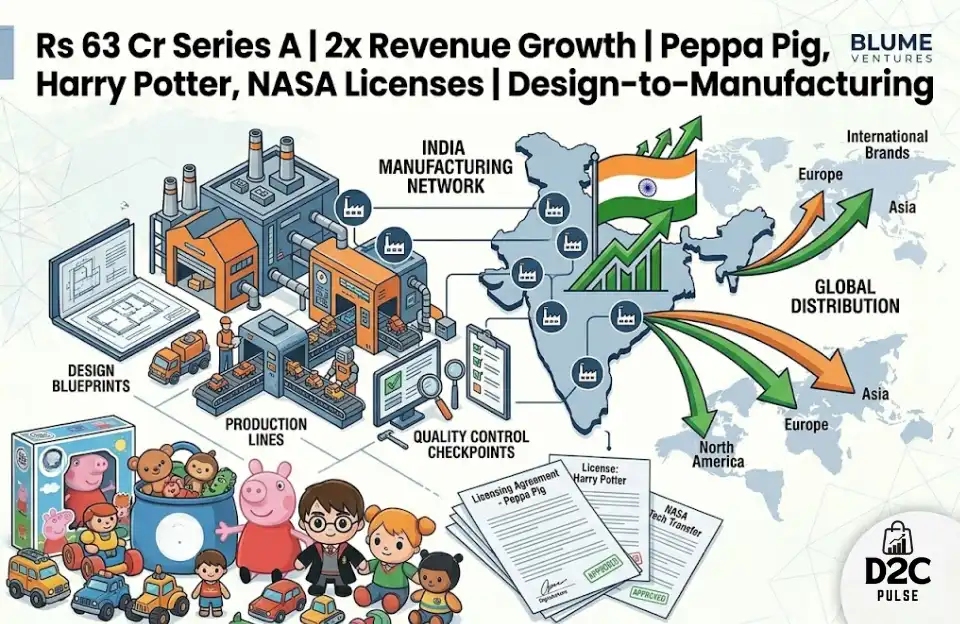
Fairdeal Funding: $15 Million to Build the B2B Quick Commerce Layer India’s Kirana Network Needs
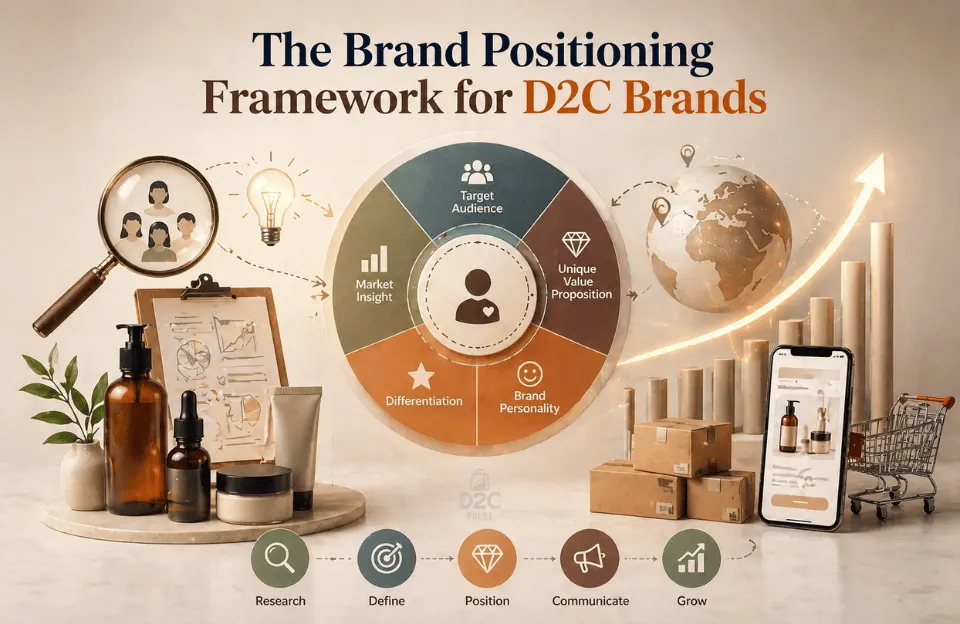


Consumer Behavior Trends: Ten Shifts That Changed How Indians Buy

Best Shopify Apps for Indian D2C Brands: The 2026 Stack That Actually Converts
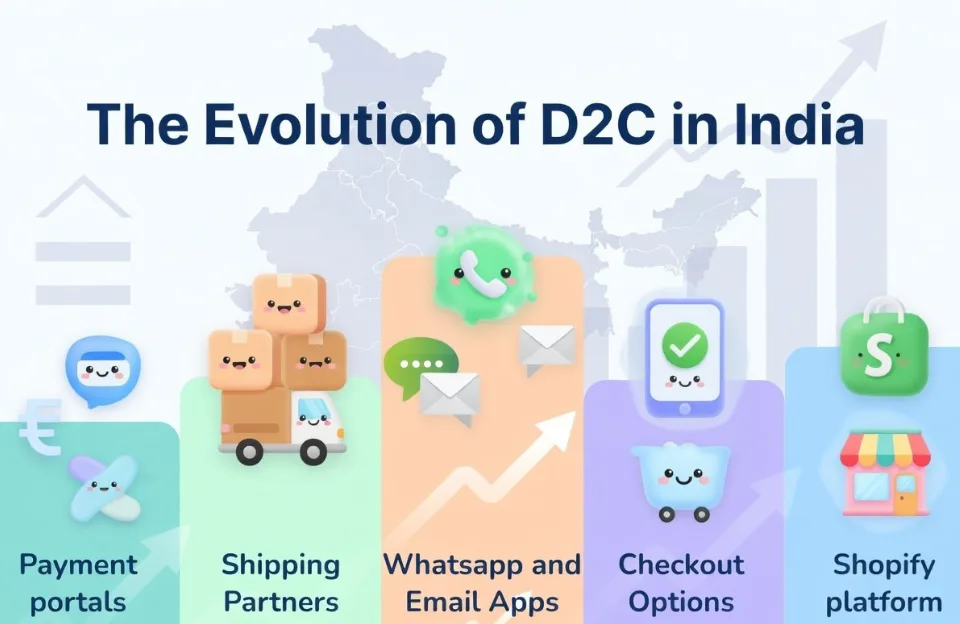
The Evolution of D2C in India: Five Phases That Shaped an $80 Billion Market
Decoding HealthFab’s Business Model
HealthFab operates in the menstrual hygiene space with a product range that includes sanitary pads, panty liners, and menstrual pain relief solutions. The brand positions itself on comfort, safety, and accessibility—three pillars that resonate with the 18-35 urban female demographic.
From a D2C lens, HealthFab’s model likely hinges on:
- Subscription revenue: Repeat purchase frequency in menstrual hygiene is predictable (28-30 day cycles), making it ideal for subscription models that improve LTV and reduce CAC over time.
- Content-led acquisition: Brands in this category invest heavily in educational content around menstrual health, PCOS, period pain, and hygiene myths. This builds organic traffic and trust.
- Omnichannel distribution: While D2C is the core, offline presence through modern trade, pharmacies, and quick commerce platforms is critical for trial and impulse purchases.
The HealthFab funding of ₹20 crore capital will likely be deployed across these three levers, with a significant portion earmarked for inventory buildup, working capital, and retail expansion.
Market Context: Femtech and Feminine Hygiene in India
India’s menstrual hygiene market is estimated at ₹5,500-6,000 crore and growing at 12-15% annually. Penetration remains low—only 50-60% of menstruating women use commercially produced sanitary products. The rest rely on cloth, ash, or other unsafe alternatives.
This presents both an opportunity and a challenge for D2C brands:
Opportunity: The addressable market is massive, especially in tier 2 and tier 3 cities where awareness is rising but affordable, trusted brands are scarce.
Challenge: Price sensitivity is extreme. While urban consumers may pay ₹8-12 per pad, rural and semi-urban consumers expect ₹2-5 per pad. Competing with government-subsidized products and ultra-low-cost local brands is tough.
HealthFab funding suggests the brand is likely targeting the urban and semi-urban segment where willingness to pay is higher and digital penetration enables D2C models to work.
The broader femtech category—which includes menstrual health, fertility, pregnancy, and menopause—has seen over $50 million in funding in India over the past three years. Brands like Sirona (raised ₹100 crore in 2022), Nua, and Azah are all vying for market share, but the category is far from winner-takes-all. There’s room for multiple brands, each catering to different consumer psychographics.

Strategic Implications for D2C Founders
HealthFab’s fundraise offers several takeaways for D2C operators:
1. Category Depth Over Category Breadth
Brands that go deep into a single category—understanding consumer pain points, regulatory nuances, and supply chain dynamics—are better positioned to raise capital than those spreading thin across multiple categories. HealthFab’s focus on menstrual hygiene allows it to own the narrative and build brand equity in a specific vertical.
2. Repeat Purchase Categories Are Investor Favorites
Menstrual hygiene, baby care, pet food, and personal care have natural repeat purchase cycles. This improves LTV:CAC ratios and makes the business model more predictable. If you’re building in a low-repeat category, you need to either increase AOV or find adjacencies that drive frequency.