L’Oréal in Talks to Acquire D2C Beauty Startup Innovist
How a $450 million L’Oréal Innovist acquisition attempt reveals both opportunity and pressure in India’s D2C beauty space
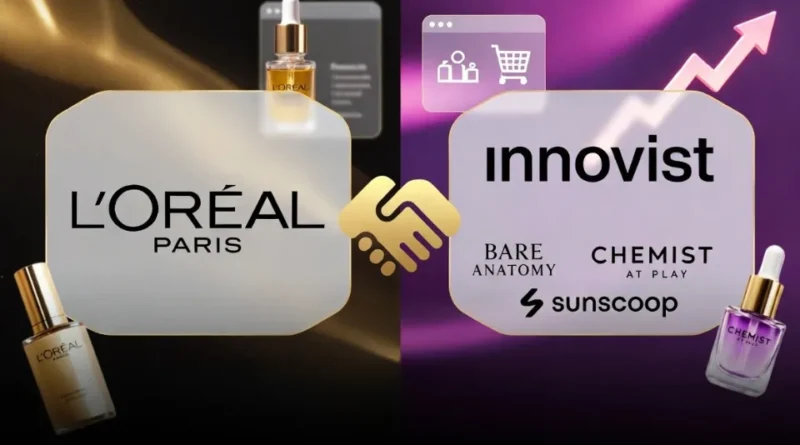
French beauty giant L’Oréal is in advanced discussions to acquire a controlling stake in Innovist. It is the parent company behind Bare Anatomy, Chemist at Play, and Sunscoop. The L’Oréal Innovist acquisition, valued $350 and $450 million, represents one of the largest strategic buyouts in India’s D2C beauty.
This is not just another funding announcement. This is a signal that global beauty conglomerates are actively hunting for digital-native brands. Especially brands that have cracked the code on Indian consumers. But the context reveals something more important: L’Oréal’s leadership has expressed dissatisfaction with the company’s recent performance in India, where sales growth slowed to 5 percent in FY25 from 14 percent the previous year.
For D2C founders and operators, this deal offers a framework for understanding how consolidation is reshaping the beauty and personal care space in India.
Why L’Oréal Is Making This Move Now
The L’Oréal Innovist acquisition attempt comes at a time when the French giant is facing mounting competitive pressure in India. While L’Oréal has operated in India since 1994 and built a portfolio of brands including Garnier, Maybelline, and L’Oréal Paris, its organic growth has stalled against a backdrop of rapid market expansion.
India’s beauty and personal care market is projected to reach $30 billion by 2027, with Gen Z consumers expected to command a $19 billion share by 2030. These consumers have different expectations: they demand science-backed formulations, personalization, ingredient transparency, and digital-first experiences. Innovist has built exactly this.
Innovist, founded in 2018 by Rohit Chawla, Sifat Khurana, and Vimal Bhola, has become a leader in personalized beauty. Bare Anatomy focuses on customized haircare, Chemist at Play offers science-driven skincare, and Sunscoop provides sun protection solutions. These brands generated revenue of Rs 301 crore in FY25, up 182 percent year-on-year, and turned profitable with a Rs 12.5 crore profit.
That combination—hyper-growth, profitability, and a Gen Z-focused brand portfolio—is rare in the D2C space. L’Oréal sees Innovist as a way to instantly acquire not just brands, but digital infrastructure, consumer insights, and credibility with a demographic that increasingly views traditional FMCG brands as outdated.

What L’Oréal Innovist acquisition Reveals About Strategic Acquisitions
The reported deal structure is significant. L’Oréal plans to initially acquire a controlling stake, with a roadmap to scale up to 100 percent ownership over the next few years. This phased approach is strategic: it allows L’Oréal to integrate operations, align teams, and ensure continuity without disrupting the entrepreneurial DNA that made Innovist successful in the first place.
Negotiations have reportedly been ongoing for nearly a year and are now in the final phase, with a potential close by April 2026. If finalized at the upper end of the $450 million valuation, this would surpass Hindustan Unilever’s acquisition of Minimalist, valued at Rs 3,000 crore in 2025.
For D2C operators evaluating their own exit options, this deal provides a clear template: profitability matters, category leadership matters, and having a distinct value proposition matters. Innovist is not being acquired because it was the cheapest option. It is being acquired because it delivers something L’Oréal cannot easily replicate in-house.
The Broader Pattern: Why FMCG Giants Are Buying D2C Brands
The L’Oréal Innovist acquisition is part of a larger consolidation wave sweeping through India’s consumer ecosystem. Over the past 18 months, we have seen Hindustan Unilever acquire the remaining stake in Oziva for Rs 824 crore, Marico acquire a majority stake in Cosmix at Rs 375 crore, USV acquire 79 percent of Wellbeing Nutrition, and ITC acquire Yoga Bar.
This pattern reveals a strategic playbook: legacy FMCG companies recognize that building digital-first brands internally is slow, expensive, and often unsuccessful. They lack the agility, cultural mindset, and consumer trust that D2C-native brands have already built. Acquiring these brands provides instant access to younger consumers, digital distribution infrastructure, and innovation pipelines.
For D2C founders, this creates a strategic opportunity. If you build a brand with strong unit economics, differentiated positioning, and clear category leadership, you become an acquisition target for companies that need what you have built. But the bar is high: you must demonstrate profitability or a clear path to it, not just revenue growth fueled by unsustainable CAC.
Competitive Dynamics and Market Implications
If this deal closes, L’Oréal will gain significant ground against competitors. Estée Lauder recently took full control of Forest Essentials, another premium Indian beauty brand. Nykaa, Sugar Cosmetics, and Mamaearth continue to scale aggressively. The market is becoming crowded, and differentiation is getting harder.
Innovist’s brands are differentiated by their science-led positioning and customization capabilities. Bare Anatomy offers personalized haircare based on hair type, concerns, and goals. Chemist at Play focuses on evidence-backed active ingredients. Sunscoop addresses a historically underserved category: sun protection formulated for Indian skin tones and climates.
These are not generic me-too brands. They solve specific consumer problems in ways that incumbent brands have not. That level of product differentiation is what drives premium valuations in M&A discussions.
How L’Oréal Innovist acquisition affects you
This acquisition attempt offers several strategic lessons for D2C operators and SaaS companies serving the ecosystem.
First, profitability is no longer optional for premium valuations. Innovist turned profitable in FY25 while maintaining high growth. That combination made it an attractive acquisition target. Brands that continue burning capital without a path to unit economics will find themselves with limited exit options.
Second, category leadership matters more than category size. Bare Anatomy is not competing in the largest beauty category, but it is the leader in personalized haircare. That focused dominance is more valuable than being a subscale player in a massive category.
Third, brand portfolios create optionality. Innovist is not a single-brand company. It has built multiple brands under one holding structure, each targeting different segments and consumer needs. This diversification reduces risk and increases strategic value.
Fourth, M&A timelines are long. Negotiations have been ongoing for nearly a year. Founders considering exit options should plan accordingly. Strategic acquisitions are not impulse purchases; they require months of due diligence, integration planning, and deal structuring.
What Happens Next
If the L’Oréal Innovist acquisition closes as expected by April 2026, it will set a new benchmark for D2C valuations in India’s beauty space. It will also intensify competitive pressure on other players to either scale rapidly, achieve profitability, or position themselves as acquisition targets.
For SaaS companies serving D2C brands, this deal underscores the importance of building tools that help brands achieve the outcomes acquirers care about: profitability, customer retention, operational efficiency, and defensible differentiation. The brands that win M&A outcomes are the ones that have strong fundamentals, not just strong marketing. The Indian D2C beauty ecosystem is entering a consolidation phase. The winners will be brands that have built real businesses, not just Instagram-friendly aesthetics. Innovist’s potential $450 million exit is proof that the market rewards substance over hype.