Insight Cosmetics Targets 60 Exclusive Brand Outlets by 2026-End as D2C Beauty Brands Accelerate Offline Expansion
Founded 2012 beauty brand plans 45 new stores across metros and Tier-II/III cities to strengthen omnichannel presence
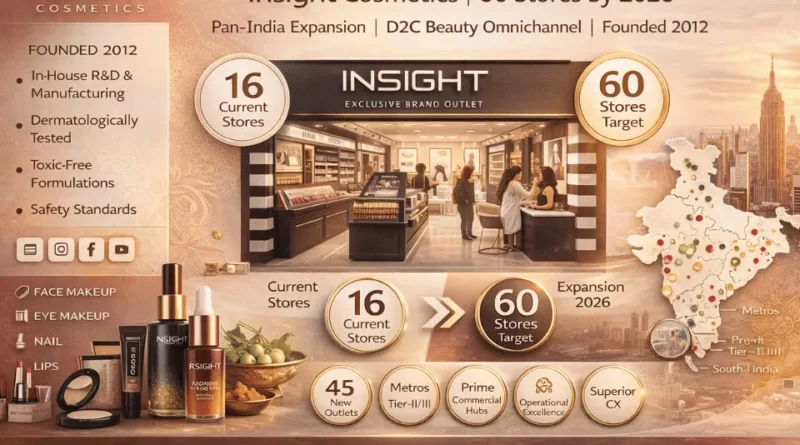
Insight Cosmetics has announced an ambitious pan-India retail expansion plan, targeting 60 exclusive brand outlets (EBOs) by the end of 2026. The move is designed to strengthen the brand’s presence across metros as well as Tier-II and Tier-III cities, bringing premium, high-quality beauty solutions closer to consumers nationwide.
Currently operating 16 EBOs, the brand intends to add approximately 45 additional stores over the next period. The upcoming outlets are strategically located in prime commercial hubs across Maharashtra, Delhi, Uttar Pradesh, and South India, with plans to expand to additional key markets in the near future.
For D2C beauty operators, Insight Cosmetics’ expansion demonstrates how established digital-first brands are now investing heavily in physical retail to improve market visibility, accessibility, and consumer trust—reflecting broader omnichannel trends reshaping the beauty category.
Why D2C Beauty Brands Are Going Offline
This reflects evolving dynamics between offline retail and e-commerce in the D2C sector, where physical experience centers complement online channels to offer cohesive customer journeys. For Insight Cosmetics, this expansion is not solely about increasing store numbers but about fostering long-term brand trust and easier consumer access—factors increasingly important in Indian D2C consumer behavior.
Mihir Jain, Director of Insight Cosmetics, explained the strategy: our retail expansion strategy is centered on making innovative, high-quality beauty products accessible to consumers across India. The exceptional performance of our existing stores validates our approach. As we gear up to open 60 outlets by 2026, we are focused on operational excellence, superior customer experience, and sustainable growth.
Each store is designed to deliver an immersive and elevated retail experience, combining innovative product offerings with curated customer journeys. Physical stores serve multiple functions: brand experience centers where customers can test products, receive consultations, and experience brand storytelling; customer acquisition channels reaching demographics less comfortable with online-only shopping; and margin-accretive revenue streams avoiding marketplace fees and discounting pressure.
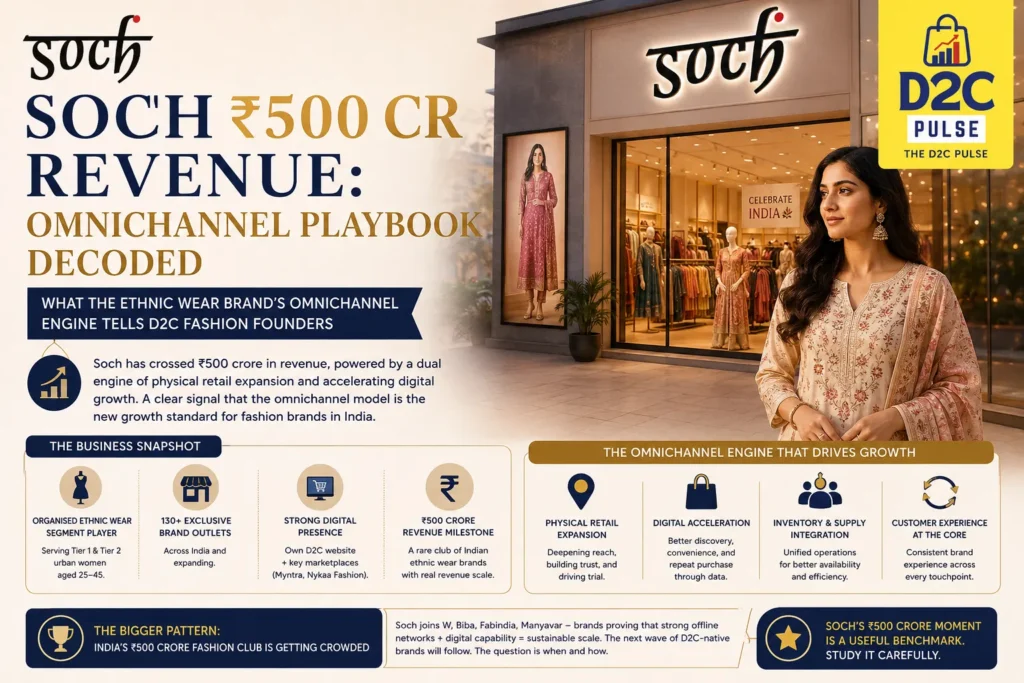
Soch ₹500 Cr Revenue: Omnichannel Playbook Decoded
Types of D2C Business Models: Eight Operational Architectures Indian Brands Use to Sell Direct
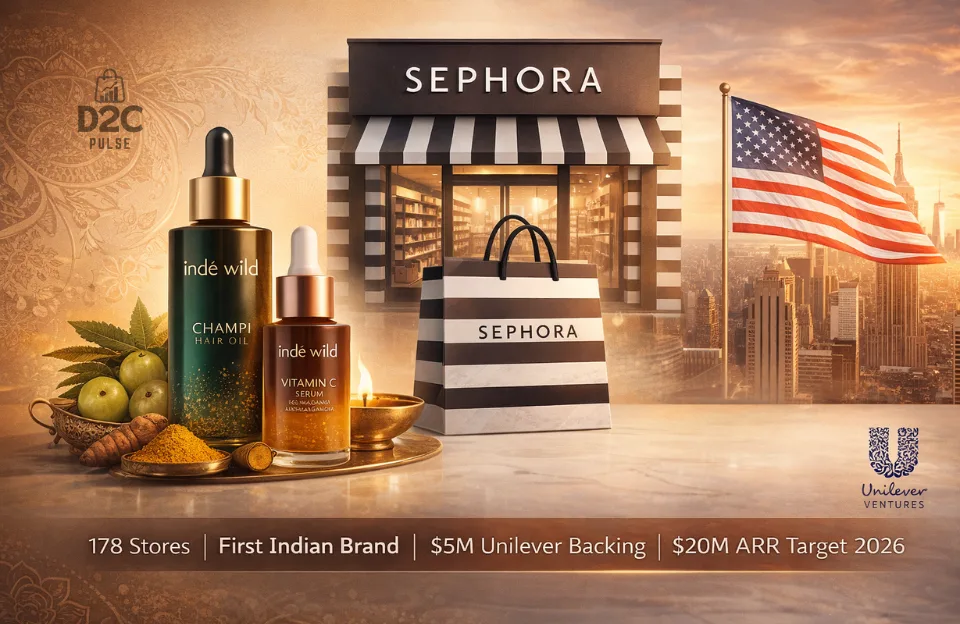
indē wild Becomes First Indian Brand at Sephora U.S.
The Email Marketing Playbook for D2C Brands: 10 Flows That Drive Repeat Revenue on Autopilot
Digital Infrastructure Enabling D2C in India: The 7 Pillars That Made It All Possible

Anveshan and the Rs 1,000 Crore Farm-to-Fork Valuation Leap
In-House Manufacturing Creates Product Differentiation
Founded in 2012, Insight Cosmetics has developed solid reputation as a D2C personal care brand by offering innovative, high-quality beauty products supported by in-house manufacturing and research and development. This commitment to product quality and safety contributes to its competitive position within the D2C industry, where differentiation often hinges on innovation.
Built on rigorous R&D, in-house production, and strict safety standards, the brand delivers toxic-free, dermatologically tested, high-performance products. This vertical integration provides control over quality, formulation, and speed-to-market that brands relying on third-party manufacturers cannot match.
Tier-II/III Expansion Captures Underserved Markets
The expansion across Tier-II and Tier-III cities reflects strategic market penetration beyond major urban centers. While metros offer density and purchasing power, they also face intense competition and high real estate costs. Tier-II/III cities provide growing middle-class consumer bases with increasing disposable incomes and beauty product demand but fewer premium beauty retail options.
By establishing presence in these markets early, Insight Cosmetics captures customers before competition intensifies. The brand’s approach underscores the importance of physical retail in brand storytelling, experiential marketing, and deeper consumer engagement. Facing increasing competition in the beauty segment, companies are emphasizing differentiated in-store experiences alongside influencer partnerships and digital marketing campaigns.

How Insights cosmetics reached here.
First, omnichannel is not optional—it’s table stakes. D2C brands that remain online-only face growth ceilings. Physical retail captures customers who prefer tactile product experiences, especially in beauty where testing shades, textures, and formulations drives purchase confidence.
Second, offline expansion requires operational discipline. Adding 45 stores in roughly one year demands supply chain readiness, trained staff, consistent brand experiences, and inventory management across locations. Brands that expand too quickly without operational backbone face execution failures that damage brand reputation.
Third, Tier-II/III markets offer first-mover advantages. Many D2C beauty brands concentrate on metros, leaving smaller cities underserved. Brands that establish presence early build loyalty before competitors arrive, capturing market share at lower customer acquisition costs.
Fourth, in-house manufacturing creates defensibility. Brands relying on third-party manufacturers face quality inconsistency, supply chain dependencies, and limited product innovation speed. In-house production provides control and differentiation.
For D2C beauty operators, the strategic playbook: build omnichannel capabilities early rather than treating offline as afterthought, ensure operational readiness before aggressive store expansion to maintain brand consistency, target Tier-II/III cities to capture underserved markets with first-mover advantages, and invest in in-house manufacturing to control quality and innovation speed. India’s D2C beauty segment is evolving from purely digital to omnichannel. The brands that successfully bridge online and offline experiences while maintaining operational discipline will capture disproportionate market share as the category matures.