
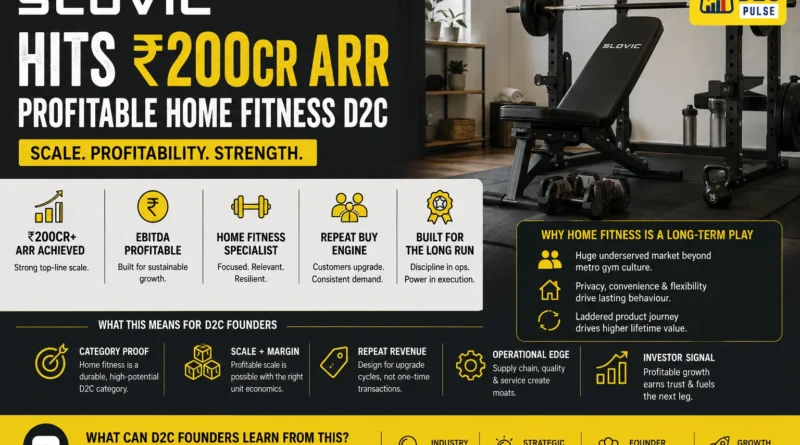
Slovic Hits ₹200Cr ARR: Profitable Home Fitness D2C
India’s home fitness D2C market just got a credible proof point. Slovic, a direct-to-consumer fitness equipment brand, has crossed ₹200 crore in annualised revenue run rate (ARR) and achieved EBITDA profitability — a combination that very few consumer hardware-led D2C brands in India have managed simultaneously. Slovic crosses ₹200 crore ARR milestone and it’s not just a number. It is a signal about category maturity, unit economics discipline, and the long-term structural opportunity in fitness retail.
What Slovic Has Built and Why It Matters
Slovic operates in the home fitness equipment segment — a category that exploded during COVID-19 and was widely expected to collapse post-pandemic as gyms reopened. That narrative has clearly not played out the way skeptics predicted.
Slovic crosses ₹200 crore ARR, combined with positive EBITDA, tells a more nuanced story. The brand has not just survived the post-COVID normalisation — it has scaled through it. This suggests the company built real repeat demand, operational leverage, and pricing power — not just one-time pandemic-driven spikes.
For context, most D2C brands in India either grow fast and burn cash, or turn profitable while staying small. Slovic crosses ₹200 crore ARR while being EBITDA positive puts Slovic in a rare, high-credibility cohort alongside brands like Mamaearth (in its early profitable phase), boAt, and Lenskart — companies that cracked both scale and margin simultaneously.
Also Read: How brands work towards Achieving Profitability in D2C
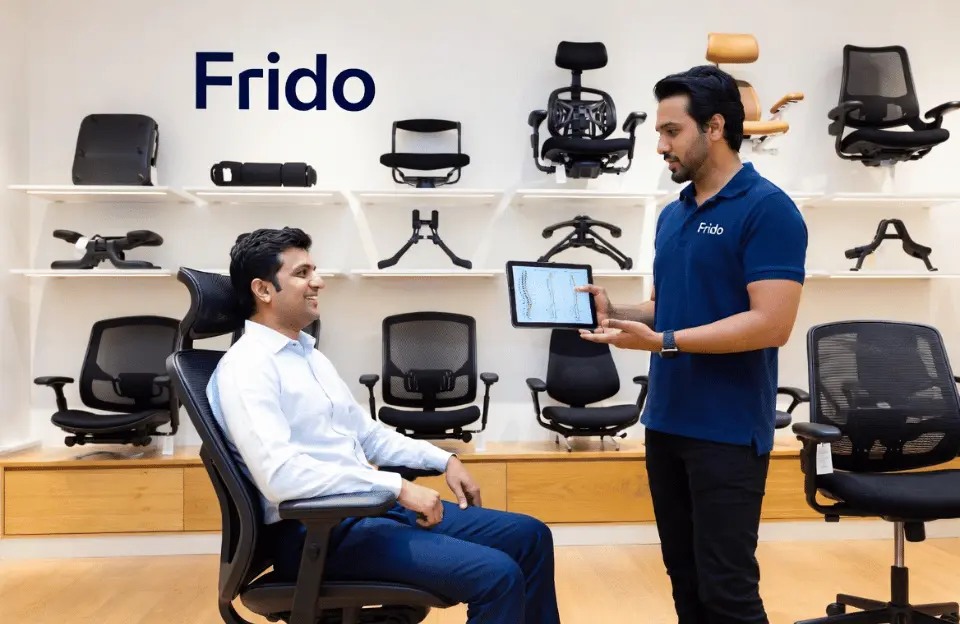
Frido Opens First Mumbai Store: An Education-Led D2C Retail Model
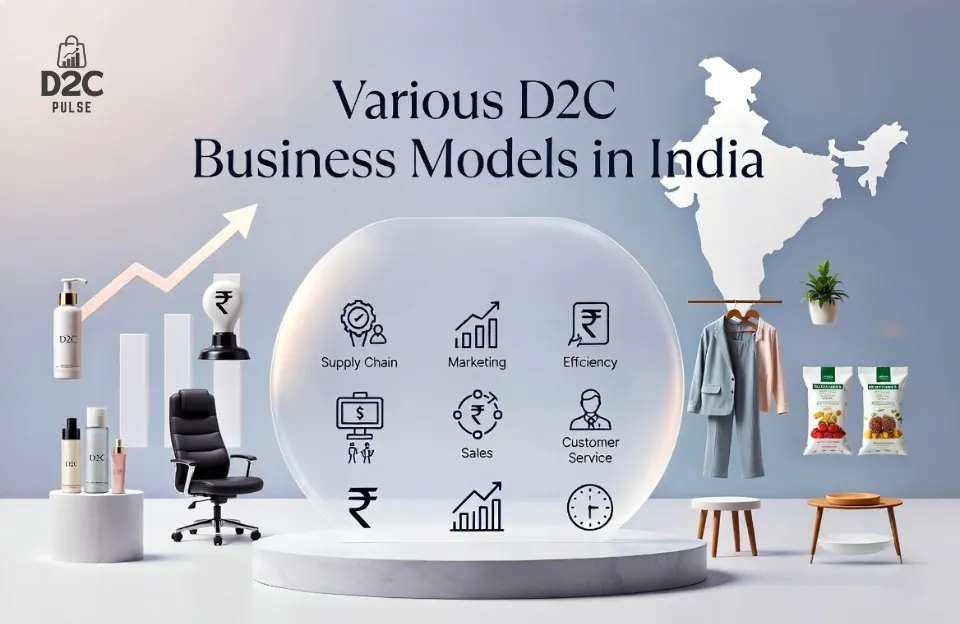
Types of D2C Business Models: Eight Operational Architectures Indian Brands Use to Sell Direct

Kraus Jeans 2026 Expansion: 20 New Stores and a Footwear Pivot

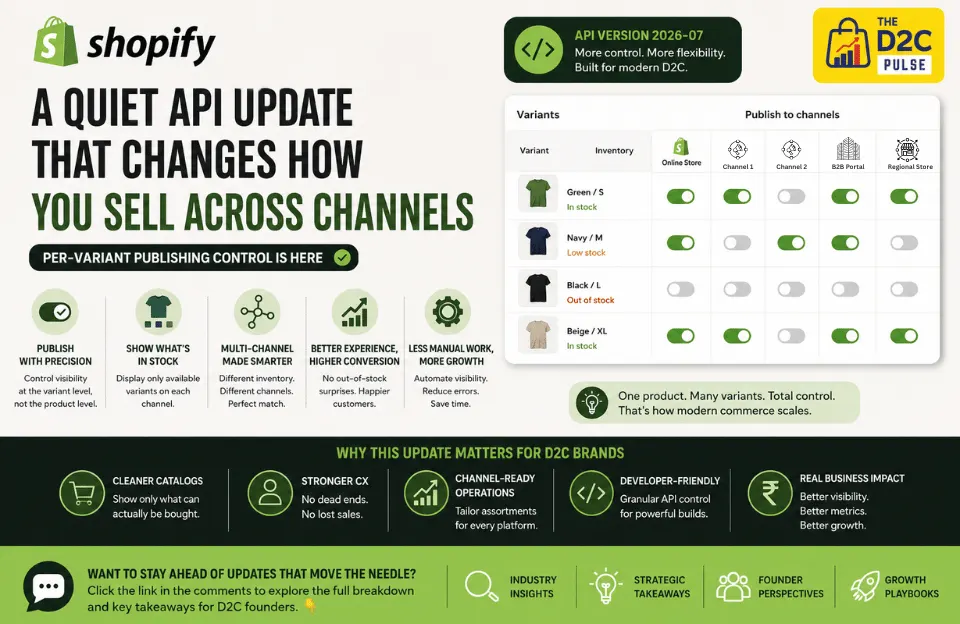
Shopify Per-Variant Publishing Control: What D2C Brands Must Know
D2C Funding Trends – India: What Changed, What’s Coming, and What Investors Want Now
The Home Fitness Category: Larger and Stickier Than Most Assume
India’s fitness equipment market is still underpenetrated relative to its potential. Organised gym culture is concentrated in Tier 1 cities. Home fitness, by contrast, addresses a much wider demographic — professionals in Tier 2 cities, women who prefer private workout spaces, and older consumers managing health conditions.
Slovic crosses ₹200 crore ARR and it’s revenue trajectory validates what category investors have been arguing: the post-COVID fitness intent did not disappear. It migrated. Consumers who started working out at home during lockdowns did not all go back to gyms. A meaningful segment built home gym setups incrementally — starting with resistance bands, moving to dumbbells, then benches and racks.
This ladder-buying behaviour creates natural repeat purchase cycles — a structural advantage for D2C brands that most other fitness categories (like supplements, for instance) compete hard to replicate. Slovic appears to have capitalised on exactly this pattern.
Also Read: CAC vs LTV Deep Dive. How you can create sustainable business.
The EBITDA Positive Signal: Discipline Over Hype
Turning EBITDA positive in a physical product category with warehousing, logistics, and manufacturing inputs is harder than it sounds. Many D2C brands in India have reported “contribution margin positive” numbers — a metric that excludes fixed costs and often creates a misleading picture of actual profitability.
EBITDA positivity is a harder, cleaner benchmark. It means Slovic’s business model — at its current operating scale — is generating more than it spends to run. This matters for three reasons:
1. Fundraising Leverage: In a market where investors have shifted from chasing GMV to demanding profitability, EBITDA-positive D2C brands command significantly better valuations and term sheets.
2. Reinvestment Capacity: Profits can fund category expansion — new SKUs, new markets, private label manufacturing — without diluting founders or taking on expensive debt.
3. Credibility Signal: For a hardware-led D2C brand, profitability signals supply chain maturity. You cannot be EBITDA positive in fitness equipment without having figured out imports, quality control, and inventory forecasting reasonably well.

Strategic Lessons for D2C Founders
Slovic’s milestone carries several transferable insights for founders building in physical product categories:
Category selection matters more than marketing. Home fitness sits at the intersection of health awareness, urbanisation, and rising disposable incomes — three of the most durable macro tailwinds in India. Picking the right category early reduces the cost of customer acquisition because the market comes to you.
Hardware D2C requires patient capital and operational depth. Margins in equipment are structurally thinner than in FMCG or beauty. Brands that survive and scale in this segment have almost always done so by building supply chain control — either through in-house manufacturing or deep sourcing relationships.
Post-pandemic sustainability separates real brands from windfalls. The fitness category saw dozens of new entrants between 2020 and 2022. Most have shrunk or exited. Slovic’s continued growth is evidence of brand loyalty and product-market fit — not just timing.
The Bigger Picture for India’s D2C Ecosystem
Slovic’s ₹200 crore ARR and EBITDA positivity land at a moment when India’s D2C ecosystem is under pressure to demonstrate sustainable business models. The days of growth-at-all-costs are over. What the market rewards now — from investors, distributors, and retail partners — is efficiency-led growth.
Slovic has delivered exactly that. And in doing so, it has raised the benchmark for what a credible D2C brand in the home fitness segment looks like in 2025.