
Shopify Per-Variant Publishing Control: What D2C Brands Must Know
A Quiet API Update That Changes How You Sell Across Channels
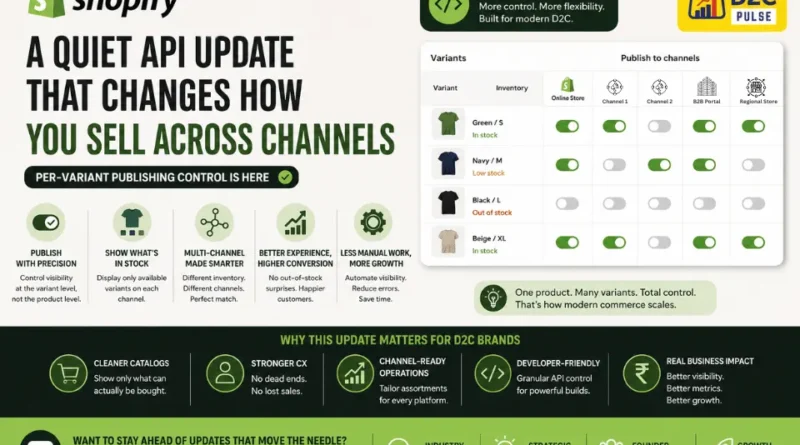
In May 2026, Shopify rolled out one of its most operationally significant — yet underreported — updates for D2C merchants – the Shopify per-variant publishing control. With API version 2026-07, Shopify now allows merchants to publish and unpublish individual product variants independently across sales channels. This means you no longer have to show or hide an entire product listing when only one size, colour, or configuration is unavailable on a specific platform.
The new Shopify per-variant publishing control gives brands surgical precision over what appears where — whether that’s your DTC website, a marketplace integration, a B2B portal, or a regional storefront. For India’s fast-growing D2C ecosystem, where brands routinely manage multiple SKUs across fragmented channels with wildly different inventory positions, this is not a minor developer changelog. It is a catalogue management unlock that directly impacts conversion rates, customer experience, and operational efficiency. If you are a D2C founder or a growth operator managing a complex product catalogue, this update deserves your full attention.
What Is Shopify, and Why Does Its Infrastructure Matter to Indian D2C Brands?
Shopify is the world’s leading commerce operating system, powering over 1.75 million businesses globally. In India, it has become the default infrastructure layer for direct-to-consumer brands — from skincare and apparel to food, wellness, and electronics. Brands like Mamaearth, Bombay Shaving Company, and hundreds of emerging D2C players have built their storefronts, checkout flows, and channel integrations on Shopify.
What makes Shopify particularly relevant to the D2C conversation is that it is not just a website builder — it is the connective tissue between a brand’s inventory, its customer touchpoints, and its sales channels. Every API update Shopify ships has downstream consequences for how brands manage products, price, and availability.
An eccentric but telling fact: Shopify processed over $235 billion in gross merchandise volume in 2023 alone — more than the GDP of several mid-sized countries. When Shopify changes how product data is structured at the API level, the ripple effect touches millions of merchants overnight.

Digital Infrastructure Enabling D2C in India: The 7 Pillars That Made It All Possible

Lessons from Failed D2C Startups in India: What Every Founder Must Learn
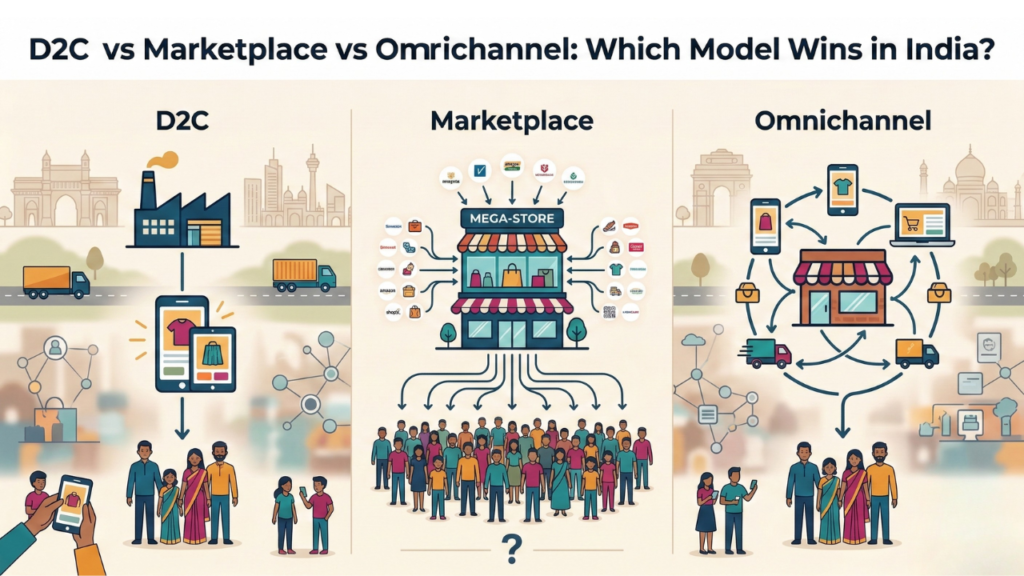
D2C vs Marketplace vs Omnichannel comparison – Which Model Wins in India?

The Email Marketing Playbook for D2C Brands: 10 Flows That Drive Repeat Revenue on Autopilot

How to Reduce CAC (Customer Acquisition Cost) : A guide for D2C brands in India
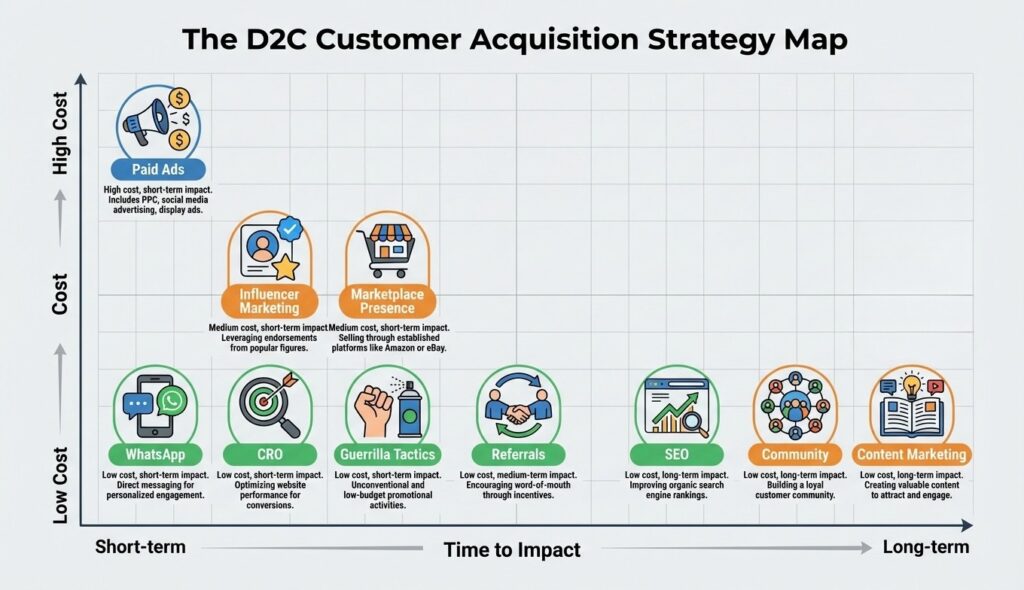
Customer Acquisition Strategies for D2C Brands in India: The Complete Playbook

What Exactly Has Changed With the 2026-07 API Update?
Before this update, variant-level visibility was tied to the parent product. If a product was published to a sales channel, all its variants were visible. If you wanted to hide a sold-out size or a region-restricted colour, your options were clunky — you either unpublished the entire product (losing visibility for available variants) or relied on workarounds like setting inventory to zero and hoping your theme handled it gracefully.
With the new API version 2026-07, Shopify introduces independent publishability at the variant level. Specifically:
- Merchants can now call
publishablePublishandpublishableUnpublishmutations on individual variants - Each variant can have a distinct publication status per sales channel
- This works across all channel types — online store, POS, wholesale, custom storefronts, and third-party integrations
This is a programmatic change, meaning brands with developer resources or headless setups can immediately leverage it. For brands on standard Shopify themes, expect third-party apps and Shopify’s native admin UI to surface this capability in the coming months.

What D2C Founders and Operators Can Learn From This Development
This update is a masterclass in why channel architecture matters as much as channel presence. Here are the strategic implications worth internalising:
1. Stop treating your catalogue as a monolith
Most D2C brands in India manage inventory reactively — a variant goes out of stock, someone manually updates the listing. Per-variant publishing enables proactive, automated catalogue hygiene. Brands can build rules: if stock of a variant drops below a threshold, auto-unpublish it from high-traffic channels to prevent dead-end customer journeys.
2. Channel-specific assortments are now viable at scale
A premium D2C brand might want to show its full range on its DTC website but restrict certain entry-level variants on a wholesale portal to protect margin. Previously, this required separate product listings. Now it can be managed cleanly at the variant level — reducing catalogue duplication and backend complexity.
3. Regional and seasonal selling becomes cleaner
For Indian brands selling across geographies — say, winter products relevant only to North India — per-variant control means you can suppress irrelevant variants on region-specific storefronts without disrupting the master catalogue.
4. Conversion rate optimisation gets a new lever
Dead variants — sizes that are perpetually out of stock but still visible — silently erode conversion rates. They create friction, frustration, and false expectations. Hiding them programmatically, rather than waiting for a manual update cycle, keeps your PDPs (product detail pages) clean and conversion-ready.
5. Headless and composable commerce brands should move first
If your brand runs a headless Shopify setup, this is an immediate action item. Build variant-level publishing logic into your catalogue management workflows now — before your competitors do.
The Bigger Pattern: Shopify Is Betting on Operational Precision
This update is part of a broader Shopify philosophy — give merchants more granular control over commerce primitives. Combined with recent updates around Markets, B2B, and combined listings, Shopify is systematically dismantling the operational bottlenecks that force brands to choose between simplicity and sophistication.
For Indian D2C brands navigating multi-channel complexity on lean teams, every reduction in manual catalogue management overhead translates directly into time, money, and fewer customer experience failures. The brands that build systems around these capabilities — rather than waiting to react — will compound their operational advantage quarter over quarter.