Soch ₹500 Cr Revenue: Omnichannel Playbook Decoded
What the Ethnic Wear Brand’s Omnichannel Engine Tells D2C Fashion Founders
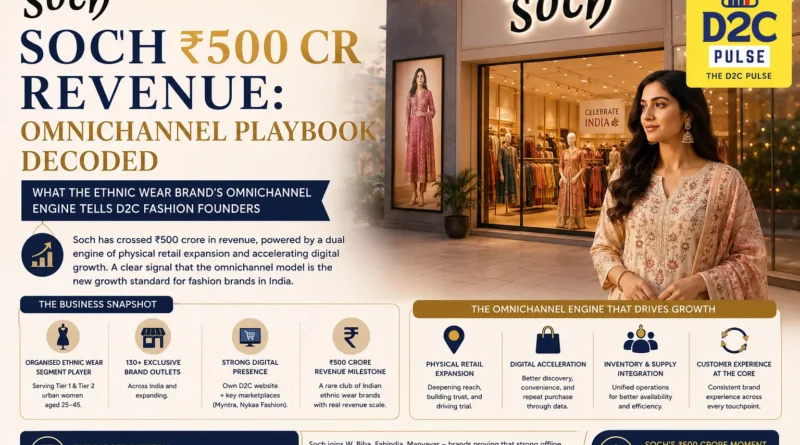
Soch, one of India’s most recognised ethnic wear brands, has crossed the ₹500 crore revenue milestone — driven by a dual engine of physical retail expansion and accelerating digital growth. The Soch revenue milestone 500 crore moment is not just a number. It is a signal about where profitable fashion retail in India is heading, and why the omnichannel model is no longer optional for brands targeting the Indian woman consumer.
What Soch Has Built: The Business Snapshot
Soch operates in the organised ethnic wear segment — a market that is large, fragmented, and notoriously difficult to scale with consistency. The brand sells salwar suits, sarees, kurtas, and fusion wear across a customer base that skews toward Tier 1 and Tier 2 urban women aged 25–45.
The ₹500 crore revenue crossing is significant because it places Soch in a small club of Indian ethnic wear brands that have scaled beyond vanity metrics into genuine revenue density. The brand operates over 130 exclusive brand outlets (EBOs) across India, combined with a growing presence on its own D2C website and major marketplaces including Myntra and Nykaa Fashion.
Importantly, growth has come from both channels firing simultaneously — not one compensating for the other.

The Omnichannel Model: Why It Works for Ethnic Wear Specifically
Ethnic wear has a specific consumer behaviour problem that most pure-play D2C brands underestimate: touch, drape, and colour accuracy matter enormously at the point of purchase.
A customer buying a silk kurta or an embroidered suit wants to feel the fabric. Returns in ethnic wear are disproportionately high on digital-only channels precisely because of this sensory gap. Soch’s strong EBO network solves the trial and trust problem, while the digital channel handles repeat purchases, gifting occasions, and out-of-city reach.
This is the omnichannel flywheel in practice:
- Offline builds trust and first purchase
- Online captures repeat and incremental purchases
- Data from both channels sharpens merchandising decisions
For D2C founders watching this, the lesson is structural: in categories where physical experience drives conversion, offline is not a cost centre. It is a customer acquisition tool.
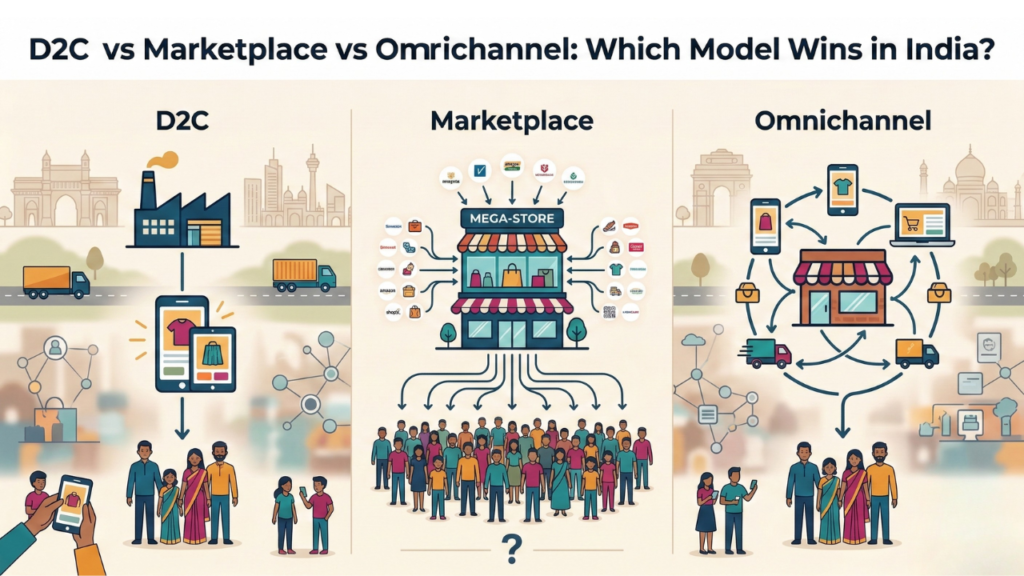
D2C vs Marketplace vs Omnichannel comparison – Which Model Wins in India?

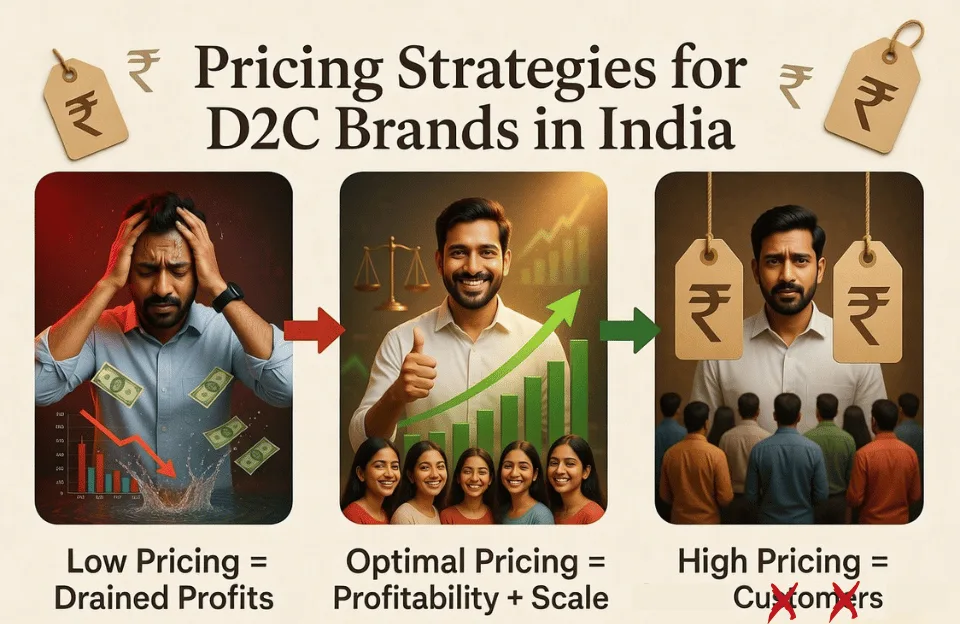
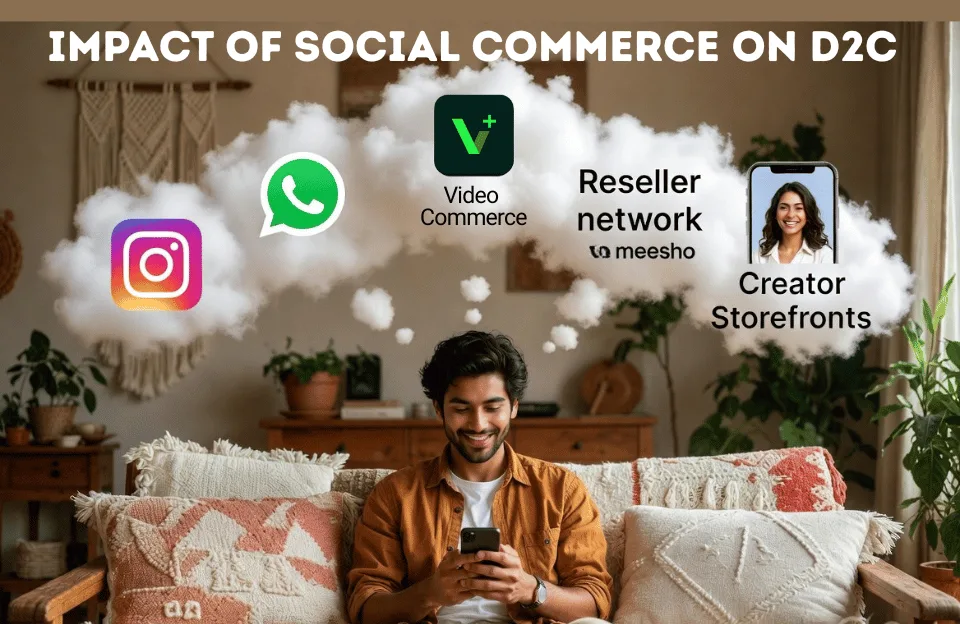
How Instagram, WhatsApp, and Video Are Rewriting the Rules of Selling Direct in India
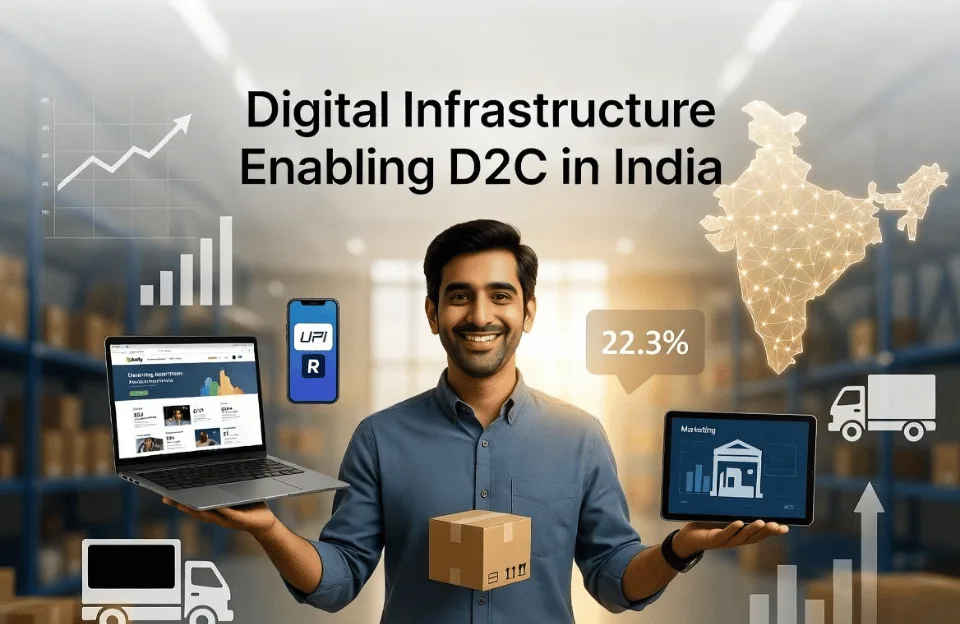
Digital Infrastructure Enabling D2C in India: The 7 Pillars That Made It All Possible



The Digital Acceleration Layer: What Changed
Soch’s digital growth acceleration is not accidental. The brand has invested in its own website experience, loyalty programme integration, and content-led discovery — particularly on Instagram and YouTube, where ethnic wear has strong organic search and visual commerce behaviour.
The shift toward digital also reflects a broader market movement. Post-pandemic, the Indian ethnic wear shopper has become genuinely omnichannel in behaviour. She may discover a kurta on Instagram, check availability on the brand website, and buy it either online or walk into a store. Soch’s ability to serve her across all three touchpoints is a competitive moat that newer D2C-only brands cannot easily replicate.
Digital also gives Soch something that pure offline retail never could: customer lifetime value visibility. Knowing which customer bought what, when, and through which channel allows the brand to build targeted retention campaigns, personalise collections, and reduce dependence on discounting.
Strategic Implications for D2C Founders
Several patterns emerge from Soch’s trajectory that are directly applicable to D2C founders building in fashion and lifestyle:
1. Revenue density matters more than revenue size.
Crossing ₹500 crore across 130+ stores means Soch is generating approximately ₹3.5–4 crore per store annually. That unit economics discipline is what makes the model fundable and scalable.
2. Category-market fit determines your channel mix.
Not every D2C brand should rush to open stores. But in touch-sensitive categories — ethnic wear, jewellery, home furnishings, beauty — offline presence materially improves conversion and reduces return rates.
3. The brand layer is what makes omnichannel work.
Soch has spent years building a consistent brand identity around the Indian woman. That brand equity is what makes a customer trust the website after experiencing the store. Without brand investment, omnichannel is just multi-channel with higher costs.
4. Digital is not replacing offline — it is making offline more efficient.
Brands that treat their D2C website as a pure revenue channel miss its role as a retention and loyalty engine that subsidises the cost of offline customer acquisition.
The Bigger Pattern: India’s ₹500 Crore Fashion Club Is Getting Crowded
Soch joins a growing list of Indian fashion brands — W, Biba, Fabindia, Manyavar — that have crossed the ₹500 crore threshold by combining strong offline networks with improving digital capabilities. The next wave of brands chasing this milestone will likely come from the current generation of D2C-native labels that are now opening their first stores.
The question is not whether to go omnichannel. The question is when and how to sequence the transition without losing the unit economics that made the D2C model attractive in the first place.
Soch’s ₹500 crore moment is a useful benchmark. Study it carefully.