MHYTH Funding: ₹5 Cr to Build Premium Innerwear Brand
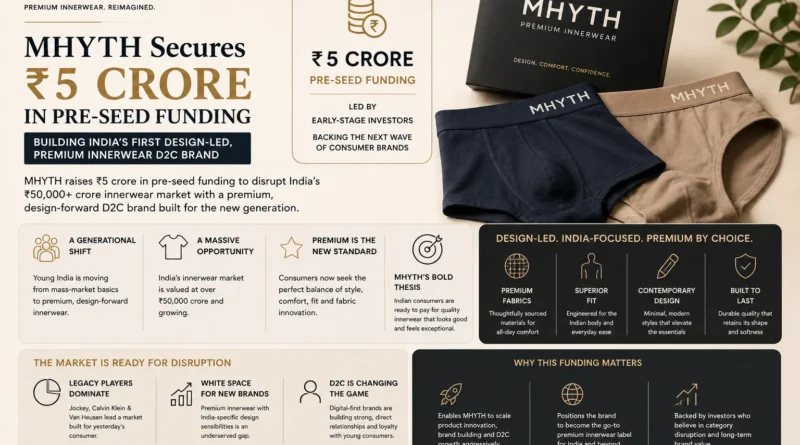
MHYTH, a Mumbai-based premium innerwear and lifestyle brand, has secured ₹5 crore in pre-seed funding to build what it calls India’s first design-led, premium innerwear D2C brand. The round was led by early-stage investors betting on the brand’s potential to disrupt a category long dominated by legacy players like Jockey, Calvin Klein, and Van Heusen.The MHYTH funding comes at a time when India’s innerwear market—valued at over ₹50,000 crore—is witnessing a generational shift.
Young consumers are moving away from mass-market basics toward premium, design-forward options that balance aesthetics with comfort. This behavioral change has created white space for new-age D2C brands willing to challenge decades-old incumbents.
What makes MHYTH Funding particularly noteworthy is its positioning. While most D2C innerwear brands have focused on affordable basics or functional athleisure, MHYTH is targeting the premium segment—a space traditionally occupied by international brands with limited India-specific design sensibilities. The brand’s thesis: Indian consumers are ready to pay for quality innerwear that doesn’t compromise on design, fit, or fabric innovation.
For D2C founders and operators, MHYTH Funding signals growing investor confidence in category-specific brands that can own a niche rather than compete in overcrowded mass-market segments.
About MHYTH
MHYTH is a premium innerwear and lifestyle brand focused on reimagining everyday essentials through superior design, fabric innovation, and fit engineering. The brand offers a range of innerwear products including boxer shorts, briefs, and undershirts, with plans to expand into adjacent lifestyle categories.
What sets MHYTH apart is its design-first approach. While most innerwear brands treat the category as purely functional, MHYTH positions its products at the intersection of comfort and aesthetics—targeting consumers who view innerwear as an extension of personal style rather than a hidden necessity.
The brand operates on a direct-to-consumer model, selling primarily through its own website and select online marketplaces. This allows MHYTH to control the entire customer experience—from product discovery to post-purchase engagement—while maintaining healthy unit economics.
An interesting aspect of MHYTH’s positioning is its focus on “premiumization without pretension.” The brand avoids the overtly luxury messaging of international players, instead emphasizing everyday premium quality that justifies its price point through tangible product benefits: better fabrics, superior fit, and thoughtful design details.

How Instagram, WhatsApp, and Video Are Rewriting the Rules of Selling Direct in India

Why Consumers Are Ready to Pay More and What It Means for D2C Brands
How to Reduce CAC (Customer Acquisition Cost) : A guide for D2C brands in India

Shopify vs WooCommerce for Indian D2C Brands: Which Platform Should You Pick in 2026?
Types of D2C Business Models: Eight Operational Architectures Indian Brands Use to Sell Direct
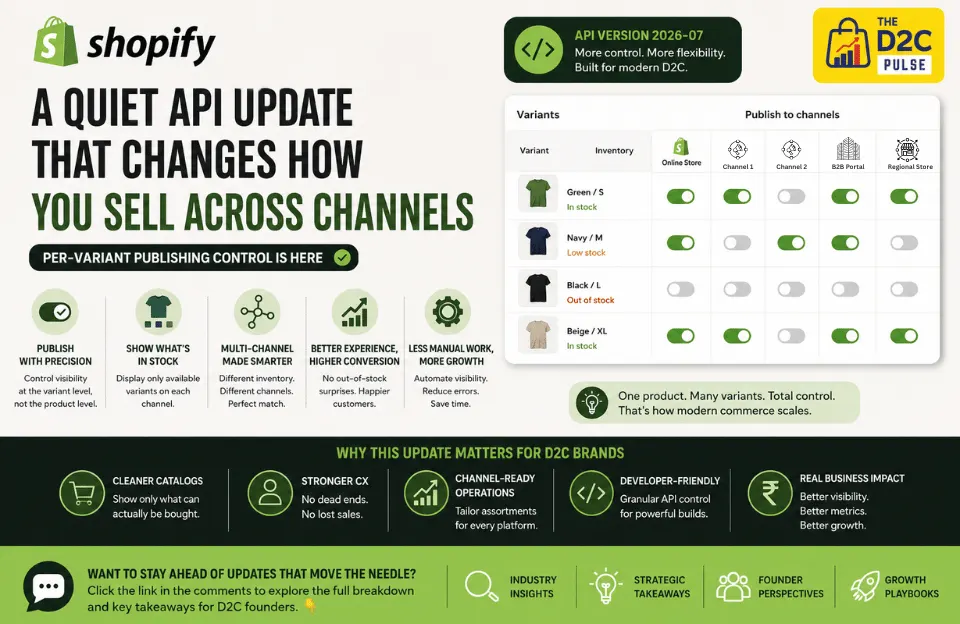
Shopify Per-Variant Publishing Control: What D2C Brands Must Know
How MHYTH Plans to Deploy the Funding
The ₹5 crore pre-seed round will primarily fuel three strategic priorities for MHYTH: product development, brand building, and supply chain optimization.
A significant portion of the capital will go toward expanding the product portfolio. MHYTH plans to introduce new fabric innovations—including moisture-wicking blends, anti-microbial finishes, and sustainable material options—that address specific consumer pain points in the Indian climate. The brand is also investing in fit engineering, conducting extensive sizing studies to develop products that work for Indian body types better than international alternatives.
Marketing and brand building form the second pillar of capital deployment. MHYTH intends to build a premium brand identity through content-led marketing, influencer partnerships, and strategic collaborations. The focus will be on educating consumers about the value of investing in quality innerwear—a category where purchase decisions have historically been price-driven rather than brand-driven.
The third focus area is supply chain and manufacturing partnerships. To maintain quality consistency while scaling, MHYTH is working with specialized manufacturers who can deliver premium finishes at reasonable costs. The brand is also building inventory buffers to ensure consistent availability—a critical factor in building repeat purchase behavior in the innerwear category.
Customer acquisition and retention infrastructure will also see investment, with MHYTH building out its subscription model and loyalty program to increase lifetime value and reduce dependency on one-time purchases.

What D2C Founders Can Learn from MHYTH’s Approach
MHYTH funding and positioning offer several strategic lessons for D2C founders navigating competitive categories.
Go premium when mass is crowded. Instead of competing on price in an overcrowded market, MHYTH chose to own the premium segment where fewer players operate. This strategy allows for better margins, more defensible positioning, and less reliance on discounting. Founders should evaluate whether their category has an underserved premium segment before defaulting to mass-market positioning.
Design can be a moat in functional categories. Innerwear has traditionally been viewed as purely functional, but MHYTH is betting that design can create differentiation even in basics. This approach works when your target audience has evolved beyond purely functional needs. Founders should identify whether their category is ready for a design-led disruption.
Niche depth beats horizontal breadth early on. Rather than launching across multiple categories, MHYTH is going deep in innerwear before expanding. This allows for category expertise, focused brand building, and operational efficiency. Early-stage D2C brands often dilute resources by expanding too quickly—depth-first strategies can create stronger foundations.
Educate before you sell. In categories where consumers haven’t traditionally paid attention to quality or design, education becomes part of the marketing funnel. MHYTH’s content strategy focuses on explaining why premium innerwear matters—shifting the conversation from price to value.
Unit economics matter more in premium. Premium positioning only works if your unit economics support it. Higher prices must translate to healthy contribution margins after accounting for premium materials, superior manufacturing, and brand-building costs. Founders entering premium segments need rigorous financial modeling to ensure sustainability.
The MHYTH funding validates that Indian consumers are willing to pay for thoughtfully designed everyday products—creating opportunities for D2C brands that can deliver genuine value beyond marketing hype.