
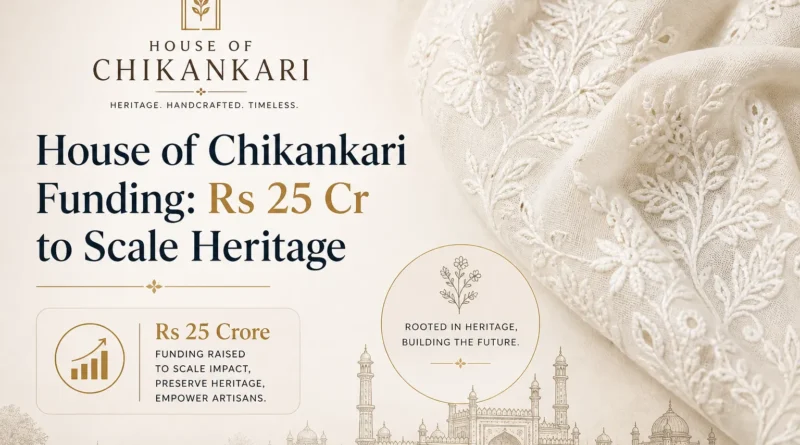
House of Chikankari Funding: Rs 25 Cr to Scale Heritage
House of Chikankari, a D2C ethnic wear brand specializing in traditional chikankari embroidery, has secured Rs 25 crore in funding from Cap Alpha Ventures. This marks one of the larger early-stage cheques in the ethnic wear D2C segment in 2026, coming at a time when investors are increasingly cautious about apparel brands with weak unit economics.
The house of chikankari funding comes after a period of relative quiet in the ethnic wear D2C space, where brands have struggled with high customer acquisition costs (CAC), low repeat rates, and margin compression. This deal suggests that investors are willing to back heritage craft-focused brands—if they can demonstrate strong fundamentals.
Deal Structure and What We Know
While the company hasn’t disclosed the funding stage or valuation, the Rs 25 crore quantum suggests this is likely a Series A round. Cap Alpha Ventures, known for backing consumer brands with clear differentiation, has reportedly been evaluating ethnic wear brands for over a year before closing this deal.
House of Chikankari was founded to bring traditional Lucknow chikankari to urban consumers through a D2C-first model. The brand operates primarily online, with a small retail footprint in select metros. The funding will reportedly be used to:
- Expand manufacturing capacity and deepen artisan partnerships
- Scale marketing and brand-building efforts
- Strengthen supply chain and inventory management systems
- Explore omnichannel retail expansion
The company claims to have grown revenue 3x year-on-year, though absolute numbers haven’t been shared. More importantly, they claim positive contribution margins at the product level—a critical metric that many apparel D2C brands struggle with.

Why This Funding Matters: Three Key Signals
1. Heritage Craft Positioning Is No Longer Enough
Five years ago, simply positioning as a “heritage craft brand” was sufficient to attract both customers and investors. Today, the bar is higher. Investors are asking: What’s your repeat purchase rate? What’s your CAC payback period? How do you maintain margins while scaling?
House of Chikankari’s ability to raise Rs 25 crore suggests they’ve answered these questions convincingly. For D2C founders in the ethnic wear space, this is a reminder that craft storytelling must be backed by solid unit economics.
The ethnic wear market is crowded with brands claiming to support artisans and preserve traditions. But without a clear path to profitability and scale, these narratives don’t translate to fundable businesses.
2. The Ethnic Wear D2C Market Is Consolidating
The Indian ethnic wear market is estimated at over Rs 1 lakh crore, but the D2C share remains under 5%. Despite the massive TAM (Total Addressable Market), most ethnic wear D2C brands have struggled to scale beyond Rs 50-100 crore in revenue.
This funding suggests that investors believe there’s room for 2-3 large winners in this category—and House of Chikankari could be positioning to be one of them. The consolidation playbook typically involves:
- Building strong brand equity in a specific craft or region
- Achieving operational excellence in sourcing and production
- Creating a moat through artisan networks and supply chain control
- Expanding into adjacent categories once core business stabilizes
For competing brands, this means the window to establish category leadership is narrowing. Brands that can’t demonstrate clear differentiation and path to profitability will find it increasingly difficult to raise capital.
3. Investors Are Betting on “Premiumization” Over Fast Fashion
Cap Alpha Ventures’ investment thesis here appears to be premiumization. Unlike fast fashion D2C brands that compete on price and trend cycles, heritage brands like House of Chikankari can command higher margins due to:
- Authentic craft and artisan stories
- Higher perceived value among urban, affluent consumers
- Lower return rates (customers buying with intent, not impulse)
- Stronger brand loyalty and repeat purchase behavior
This is consistent with broader consumer trends in India, where middle and upper-middle class consumers are increasingly willing to pay premium for authenticity, quality, and sustainability.
For D2C founders, this reinforces the importance of positioning. In apparel, competing on price is a race to the bottom. Competing on brand, quality, and story creates defensibility.

6 Customer Acquisition Mistakes D2C Brands Keep Making in India

Achieving Profitability in D2C: The Stage-by-Stage Playbook for Indian Brands



Frido Opens First Mumbai Store: An Education-Led D2C Retail Model
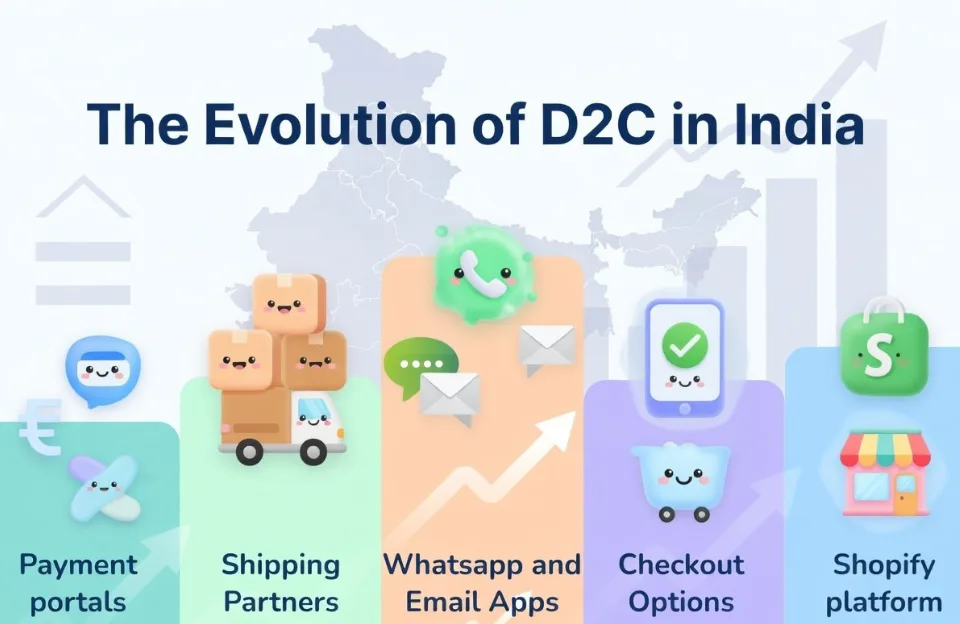
The Evolution of D2C in India: Five Phases That Shaped an $80 Billion Market
The Operational Challenges Ahead
Raising Rs 25 crore is the easy part. Deploying it effectively while maintaining margins is where most apparel brands falter. House of Chikankari will face several operational challenges:
Supply Chain Complexity: Chikankari is handcrafted, making it difficult to scale production without compromising quality. The brand will need to balance growth with artisan capacity, quality control, and lead times.
Inventory Management: Ethnic wear has high SKU complexity (sizes, colors, designs, occasions). Poor inventory management can quickly erode margins through markdowns and dead stock.
CAC Inflation: Digital marketing costs continue to rise. The brand will need to build organic channels (content, community, repeat purchases) to reduce dependency on paid acquisition.
Omnichannel Execution: If they’re planning retail expansion, they’ll need to manage the complexity of inventory allocation, store economics, and brand consistency across channels.
Talent and Team: Scaling from a small team to a 100+ person organization requires strong operational leadership—a gap that many founder-led D2C brands struggle with.
What D2C Founders Can Learn
1. Niche Depth Over Category Breadth: House of Chikankari’s focus on a single craft form (chikankari) creates expertise, supply chain control, and brand clarity. Many ethnic wear brands dilute themselves by trying to do too much too soon.
2. Unit Economics Come First: In the current funding environment, growth without profitability doesn’t attract capital. Focus on contribution margin, CAC