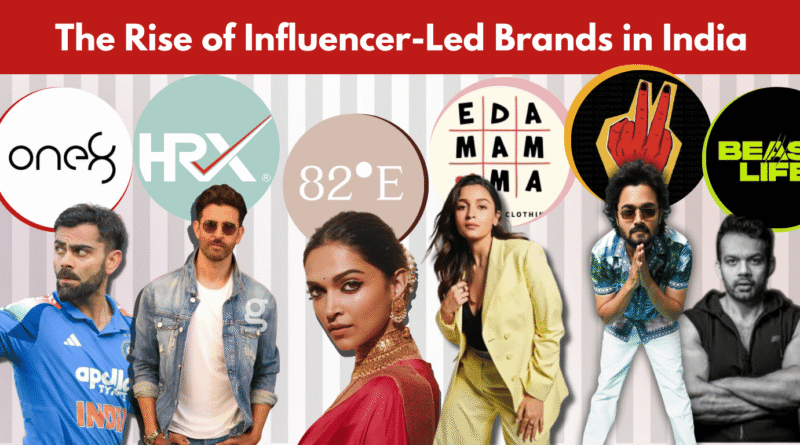
The Rise of Influencer-Led Brands in India: When Creators Become Founders
From Bollywood Stars to YouTube Creators, Everyone Is Launching a D2C Brand. Here Is What Is Working, What Is Not, and What It Means for You.
Let us start with a question. When was the last time you bought something because a celebrity told you to? Probably a while ago. Now, when was the last time you bought something because a YouTuber you follow recommended it? Probably last week. That shift says everything about the rise of influencer-led brands in India.
Virat Kohli launched One8 and grew it into a lifestyle brand worth Rs 112 crore. Alia Bhatt started Ed-a-Mamma, and Reliance Retail bought a majority stake at a Rs 300–350 crore valuation. Katrina Kaif’s Kay Beauty hit Rs 350 crore in annual sales.
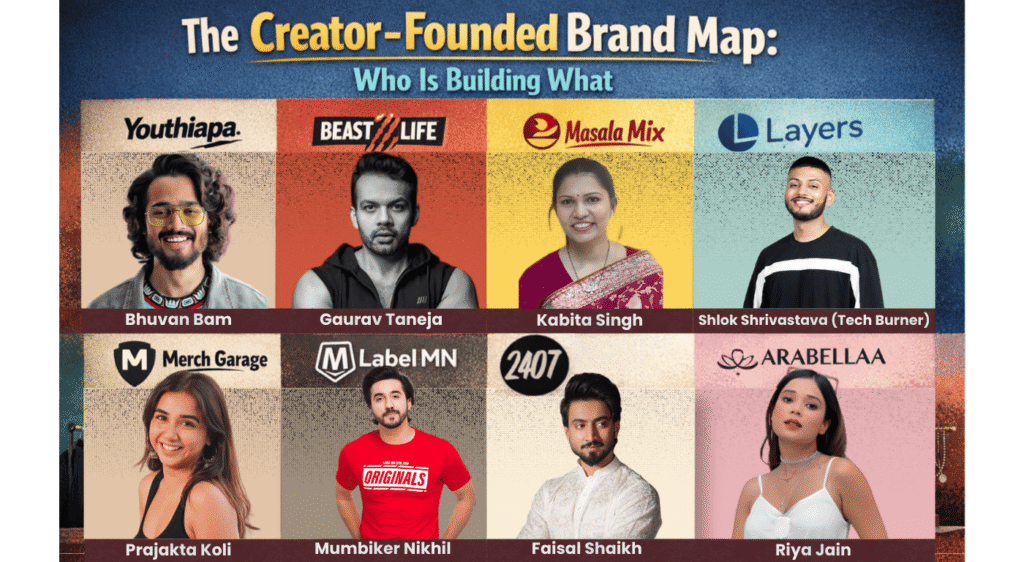
But here is where it gets interesting. It is no longer just the A-listers. Bhuvan Bam launched Youthiapa, a clothing brand built on catchphrases from BB Ki Vines. The site crashed on launch day because too many fans tried to buy at once. Gaurav Taneja, known as Flying Beast, started Rosier Foods, a farm-to-table ghee brand. Kabita Singh turned her cooking YouTube channel into Kabita’s Kitchen Masala Mix. Mumbiker Nikhil created Label MN. Tech Burner launched Layers, a phone case brand.
These are not endorsement deals. These are creators putting their own money, their own name, and their own reputation behind products they designed. The rise of influencer-led brands in India is happening at every level of fame. And it is rewriting how D2C brands get built.
Why Influencer-Led Brands Are Taking Off in India
The rise of influencer-led brands in India did not happen overnight. Four things came together at the same time.
Ad Costs Are Eating D2C Budgets Alive
Customer acquisition costs on Meta and Google keep going up. Around 30% year-on-year in popular D2C categories. A new brand without an audience has to spend Rs 500–800 just to get one customer. An influencer launching a brand? They post one Reel and the first thousand orders roll in. No ad spend. No agency fees. Just trust they already earned.
India’s Creator Economy Got Serious
India’s influencer marketing industry is on track to hit Rs 3,375 crore by 2026. That is 25% growth every year. Globally, the creator economy crossed $250 billion in 2025. There are 127 million active creators worldwide. In India, more than 50 million creators are producing content across Instagram, YouTube, and other platforms. This is no longer a side hustle. It is an industry.
Launching a Brand Got Way Cheaper
Ten years ago, starting a consumer brand required a factory, a warehouse, and a distribution network. Today, a creator can partner with a contract manufacturer, set up a Shopify store, connect Razorpay for payments, and use Shiprocket for delivery. The entire stack costs less than what a single TV ad used to cost. The creator brings the audience. The ecosystem handles the rest.
People Trust People, Not Logos
Roughly 43% of Indian shoppers say creators influence what they buy. Among Gen Z, 65% discover D2C brands through influencer content. That trust is not transferable to a faceless brand. It belongs to the person. When that person launches a product, the trust comes with it.
The old way: build a brand, then spend years finding customers. The new way: spend years building an audience, then launch a brand. Influencer-led brands in India skip the hardest part of D2C. They start with people who already care.
[Internal link: Read Customer Acquisition Strategies for D2C Brands for how audience-driven growth works]
The Celebrity Layer: Big Names, Big Bets, Big Results
The first wave of influencer-led brands in India came from Bollywood and cricket. These are the deals that made headlines.
| Celebrity | Brand | Category | What Happened |
| Virat Kohli | One8, Wrogn | Athleisure, Fashion | One8 started with Puma. Expanded to restaurants (One8 Commune). Brand valued at Rs 112 Cr. Sold to Agilitas Sports in Dec 2025 with Kohli reinvesting Rs 40 Cr. |
| Katrina Kaif | Kay Beauty | Cosmetics | Backed by Nykaa. Reached Rs 350 Cr annual sales. Built for Indian skin tones. One of the most commercially successful celebrity beauty brands in India. |
| Alia Bhatt | Ed-a-Mamma | Kidswear | Sustainable, organic kidswear. Reliance Retail acquired majority stake. Valuation Rs 300–350 Cr. Now expanding into women’s wear. |
| Deepika Padukone | 82°E | Premium Skincare | Co-founded. Also invested in Blue Tokai Coffee and Epigamia. Diversified portfolio approach. |
| Masaba Gupta | House of Masaba | Fashion, Beauty | Designer turned founder. Built brand on personal style. Expanded from fashion into beauty with strong D2C presence. |
| Hrithik Roshan | HRX | Athleisure | One of the earliest. Licensed through Myntra. Fitness-first positioning that matched his personal image. |
These brands work because the celebrity is not just a face on the packaging. They hold equity. They are involved in product decisions. When Alia Bhatt insists on organic cotton for Ed-a-Mamma, that is not a marketing claim. It is a founder decision. That difference matters to consumers.
Marmeto, India’s First Shopify Premier Partner, Pivots From Services to Product-First Technology Company
Anveshan and the Rs 1,000 Crore Farm-to-Fork Valuation Leap
L’Oréal in Talks to Acquire D2C Beauty Startup Innovist
Assiduus Global Raises $25 Million to Scale AI-Powered Middleware for Cross-Border D2C Commerce
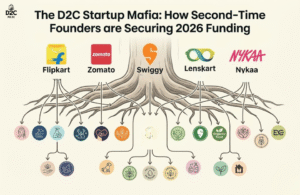
The D2C Startup Mafia: How Second-Time Founders are Securing 2026 Funding
Bidso Raises Rs 63 Crore Series A Led by Blume Ventures to Scale Contract Manufacturing Platform for D2C Brands
The Creator Layer: Where the Rise of Influencer-Led Brands Gets Really Interesting
Here is where the story shifts from glamorous to scrappy. From press conferences to Instagram stories. From Bollywood to Baroda.
India’s YouTube and Instagram creators are launching their own D2C brands. They do not have Alia Bhatt’s budget. They do not have Virat Kohli’s Puma deal. But they have something that might matter more: a direct, daily connection with their audience.
Bhuvan Bam and Youthiapa
Bhuvan Bam, the face behind BB Ki Vines (26+ million YouTube subscribers), launched Youthiapa in 2017. It was India’s first Shopify-powered YouTuber merchandise store. The products are simple: t-shirts, hoodies, phone covers, and mugs featuring his iconic catchphrases and characters.
Here is the part that matters. On launch day, the website crashed. Too many people trying to buy at the same time. That is not something you achieve with paid ads. That is what happens when 26 million people feel a personal connection to the person selling the product.
Youthiapa works because Bhuvan did not hire a marketing agency to sell t-shirts. He is the marketing. His comedy, his characters, his personality are the brand. Fans do not just buy a hoodie. They buy a piece of Bhuvan’s world.
Gaurav Taneja (Flying Beast) and Beast Life
Gaurav Taneja is an IIT Kharagpur alumnus, a commercial pilot, a certified nutritionist, and one of India’s most watched family vloggers. His YouTube channel Flying Beast has over 9 million subscribers. His net worth is estimated at Rs 37 crore.
Launched in 2024, Beast Life is Taneja’s flagship D2C fitness and nutrition brand. The brand was born out of Taneja’s decade-long experience in bodybuilding and his frustration with the lack of transparency in the Indian supplement market.
The brand famously clocked ₹1 crore in sales within its first hour of launch and reportedly achieved a GMV of ₹50 crore within its first year. In 2025, Taneja appeared on Shark Tank India Season 4. While he didn’t secure a deal—partly due to the “Sharks” questioning his ability to juggle YouTube with a serious startup—the appearance significantly boosted the brand’s visibility.
More Creators, More Brands
- Kabita Singh (Kabita’s Kitchen, 16M+ YouTube subscribers) launched Kabita’s Kitchen Masala Mix. She turned years of cooking content into a packaged spice brand. Her audience already cooked her recipes. Now they buy her ingredients.
- Mumbiker Nikhil launched Label MN, a lifestyle clothing brand built on his adventure and travel persona.
- Tech Burner (Shlok Srivastava, 12M+ subscribers) launched Layers, a phone accessories brand. His tech reviews taught his audience which products are good. Now he makes the product himself.
- Prajakta Koli (MostlySane, 7M+ subscribers) started Merch Garage. Relatable Gen Z designs that feel like an extension of her content.
- Faisal Shaikh (TikTok and Instagram creator, 40M+ followers) launched 2407, a deodorant brand targeted at young men.
- Riya Jain created Arabellaa, a fashion brand that grew into one of India’s most talked-about influencer-founded clothing labels.
Look at that list. A pilot selling ghee. A comedian selling hoodies. A cooking channel selling spices. A tech reviewer selling phone cases. None of these brands would have existed ten years ago. The rise of influencer-led brands in India has made it possible for anyone with an audience and a good product idea to become a brand founder.
Why the Economics of Influencer-Led Brands Work Differently
Forget the celebrity glamour for a moment. The reason influencer-led brands in India are growing has nothing to do with fame. It is about maths.
The CAC Advantage
A regular D2C skincare brand might pay Rs 600 to acquire a customer through Instagram ads. Bhuvan Bam posts one Reel about Youthiapa and gets thousands of orders without spending a rupee on ads. Kabita Singh mentions her masala mix at the end of a cooking video, and her 16 million subscribers see it as a recommendation, not an advertisement.
That CAC gap is enormous. In a market where most D2C brands spend 30–40% of revenue on marketing, influencer-led brands can operate at 10–15%. That difference goes straight to margin.
Trust Is Pre-Built
Normal brands need months of reviews, social proof, and ad frequency before a new customer trusts them enough to buy. A creator’s audience already trusts the person. That trust transfers to the product on day one. Conversion rates in the first 90 days are typically higher for influencer-led brands than for traditional D2C launches.
Content Never Stops
Most D2C brands hire agencies to produce ad creative. They budget Rs 2–5 lakh a month for content production. A creator is the content factory. Every video, every story, every post is both entertainment and product marketing. The content is free because the creator was going to make content anyway. The brand just gets woven into it.
Feedback Is Instant
Gaurav Taneja does not need to run a focus group to find out what his audience thinks about Rosier Foods pricing. His comment section tells him in real time. Bhuvan Bam knows which Youthiapa designs work because fans tell him in DMs. This feedback speed lets influencer-led brands iterate faster than traditional brands.
What Goes Wrong: The Real Risks Behind Influencer-Led Brands in India
This is not all smooth sailing. Plenty of influencer-led brands have struggled. Some quietly disappeared. Here is why.
- The brand lives and dies with one person. If the creator faces a scandal, a health issue, or just falls out of public attention, the brand takes a direct hit. A traditional brand like Mamaearth can survive even if a co-founder steps back. Youthiapa without Bhuvan Bam is just another clothing brand.
- Followers are not customers. Having 10 million subscribers does not mean 10 million people will buy your product. Real conversion rates are 1–3%. Some creators have massive reach but very low commercial pull. Their audience watches for free entertainment, not product recommendations.
- Products have to actually be good. When a creator puts their face on a product, quality expectations go up. If Kabita Singh’s masala mix does not taste right, it does not just hurt the brand. It hurts her credibility as a cook. One bad batch can undo years of content trust.
- Growth hits a ceiling. The first 5,000 customers come from the creator’s audience. Getting to 50,000 requires paid ads, marketplace presence, SEO, and offline distribution. Many influencer-led brands in India plateau because they cannot make the leap from creator-audience to mass-market brand.
- Running a business is different from making content. Supply chains, inventory management, returns handling, GST compliance, customer support. These are not skills that come with a YouTube Silver Play Button. The successful influencer-led brands pair the creator with an experienced operations co-founder or partner.
The biggest risk is also the biggest advantage: everything depends on the creator. That personal connection drives the initial sales. But it also means the brand has a single point of failure. The smartest influencer-led brands in India are building brand equity that can eventually stand on its own, separate from the creator’s personal fame.
[Internal link: Read Understanding Unit Economics for D2C Brands in India for the operational reality behind any D2C brand]
What Every D2C Founder Can Steal from Influencer-Led Brands
You do not need 10 million followers to use these ideas. Here is what works, translated for founders without a fan base.
- Start building an audience six months before you launch. Pick your category. Start a YouTube channel, an Instagram page, or a newsletter about it. Teach people about skincare ingredients. Review mattresses. Compare protein powders. By launch day, you have an audience that trusts your expertise. That audience is your first 500 customers.
- Put your face on the brand. Bhuvan Bam IS Youthiapa. Gaurav Taneja IS Rosier Foods. Aman Gupta IS boAt. In the Indian market, people buy from people. A founder who shows their face, tells their story, and speaks directly to customers will always outperform a faceless logo.
- Work with 50 micro-creators, not one celebrity. Three out of four D2C brands in India now use creators to grow. Nano and micro-creators generate 5–6x more engagement than mega influencers. Seed your product with small creators who actually use it. Their honest reviews become your social proof.
- Make content that teaches, not just sells. Kabita Singh did not start selling masala on day one. She spent years teaching people to cook. Gaurav Taneja spent years teaching fitness. The selling came later, built on top of expertise. Content-first, commerce-second.
- Design for the phone camera. Every product touchpoint should look good in a Reel. Packaging that photographs well. Unboxing experiences worth sharing. Colours that pop on screens. If your product does not make someone want to take a photo of it, you are leaving organic marketing on the table.
Where Influencer-Led Brands in India Go from Here
A few predictions based on the trends we are watching at The D2C Pulse:
- More creators will launch brands in 2026 and 2027. D2C infrastructure keeps getting cheaper. Contract manufacturing is accessible. Print-on-demand platforms mean you can test designs with zero inventory risk. The barriers to entry are almost gone.
- Investors will start writing cheques specifically for creator-founders. The audience is a quantifiable asset. A creator with 5 million engaged followers is starting with a distribution channel that a traditional founder would pay crores to build.
- Big companies will keep buying influencer-led brands. Reliance bought Ed-a-Mamma. Nykaa backs Kay Beauty. HUL acquired Minimalist (which had an influencer-style, education-first brand strategy). Expect more acquisitions as legacy FMCG companies buy trust they cannot build organically.
- The brands that last will separate from the creator over time. The test of an influencer-led brand is whether it can survive without the creator promoting it every day. The ones that build real product quality, real customer loyalty, and real operational strength will outlast any individual’s fame.
- Live shopping will make this trend faster. Instagram Live, YouTube Live Shopping, and quick commerce platforms are turning content into real-time transactions. When a creator can sell while they create, the line between content and commerce disappears entirely.
Key Takeaways
- The rise of influencer-led brands in India spans three waves: celebrity equity brands (Kohli, Alia, Katrina), athlete brands (Dhoni, Pandya), and creator-founded brands (Bhuvan Bam, Gaurav Taneja, Kabita Singh, Tech Burner). The third wave is the most disruptive.
- The core advantage is CAC. In a market where customer acquisition costs Rs 500–800, owning a trusted audience is the single strongest competitive moat a D2C brand can have.
- Creator brands work because trust is pre-built. Youthiapa’s website crashed on launch day. Not because of ads. Because 26 million people already trusted Bhuvan Bam.
- The risks are real. Single-person dependency, follower-to-customer gaps, quality expectations, growth ceilings, and operational complexity all threaten influencer-led brands that do not build beyond the creator.
- You do not need millions of followers to apply these ideas. Build an audience before launch. Put your face on the brand. Work with micro-creators. Make content that teaches. Design for shareability.
- Legacy companies are buying. Reliance, Nykaa, and HUL have all acquired or backed influencer-style brands. The exit path is proven.
Frequently Asked Questions
What are influencer-led brands in India?
Influencer-led brands are D2C companies built by celebrities, athletes, or digital creators who use their existing audience and trust to launch consumer products. Unlike simple endorsements, the influencer holds equity and is deeply involved. Examples range from Virat Kohli’s One8 and Katrina Kaif’s Kay Beauty to Bhuvan Bam’s Youthiapa and Gaurav Taneja’s Rosier Foods.
Which Indian YouTubers have launched their own brands?
Several Indian creators have launched D2C brands. Bhuvan Bam started Youthiapa (clothing), Gaurav Taneja launched Rosier Foods (ghee), Kabita Singh created Kabita’s Kitchen Masala Mix (spices), Mumbiker Nikhil started Label MN (clothing), Tech Burner launched Layers (phone accessories), Prajakta Koli started Merch Garage (merchandise), and Faisal Shaikh launched 2407 (deodorant).
Why are influencer-led brands growing so fast in India?
Four forces: rising ad costs make owned audiences valuable, the creator economy reached Rs 3,375 crore (growing 25% annually), D2C infrastructure reduced launch costs, and consumers trust creators more than traditional advertising. About 43% of Indian shoppers are influenced by creator content, and 65% of Gen Z discover brands through influencers.
Can influencer-led brands in India survive without the influencer?
That is the biggest test. Brands like Kay Beauty (Rs 350 Cr annual sales) and HRX have built enough product and brand equity to sustain even if the celebrity steps back. Smaller creator brands are more vulnerable. The long-term winners will be those that build product quality, customer loyalty, and operational strength beyond the creator’s personal reach.
What can a D2C founder without a following learn from this trend?
Start creating content in your category 6–12 months before launch. Make the founder visible and relatable. Partner with micro-influencers as co-creators. Invest in educational content. Design products that look good on camera. You do not need celebrity status. You need authenticity and consistency.