
BlissClub Funding: ₹250 Cr to Scale Women’s Activewear
BlissClub Secures ₹250 Crore at ₹750 Crore Valuation, Marking Major Milestone for Women’s Activewear
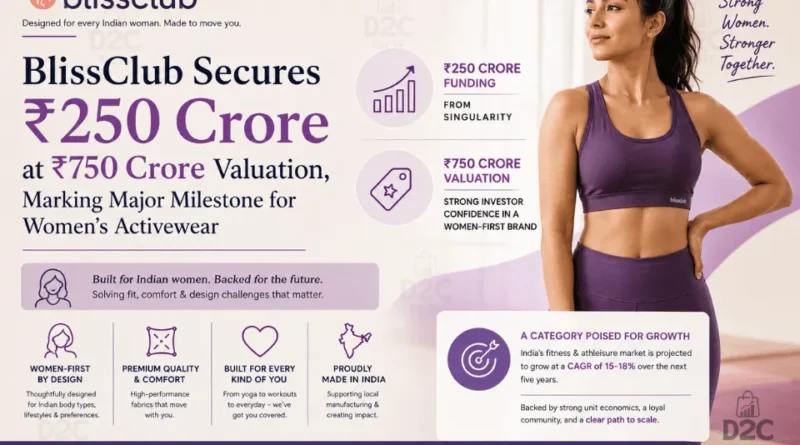
BlissClub, the women-first activewear brand, is set to raise ₹250 crore from Singularity at a valuation of ₹750 crore, marking one of the significant funding rounds in India’s D2C activewear segment in 2026. The BlissClub Funding development signals strong investor confidence in category-specific D2C brands that solve for underserved consumer segments.
The blissclub funding india activewear round comes at a time when India’s fitness and athleisure market is projected to grow at a CAGR of 15-18% over the next five years. While global brands like Nike and Adidas have dominated this space, BlissClub’s women-centric approach has carved out a distinct positioning that resonates with India’s growing fitness-conscious female demographic.
What makes BlissClub Funding particularly noteworthy is the valuation multiple—suggesting that investors are betting on BlissClub’s ability to build a sustainable, profitable business in a category that has traditionally been capital-intensive and dominated by international players. The ₹750 crore valuation indicates strong unit economics and a clear path to scale, two factors that have become non-negotiable in today’s funding environment.
This BlissClub Funding round also reflects a broader trend: investors are moving away from generic horizontal plays and backing vertical-specific brands with deep category expertise. BlissClub’s focus on solving fit, comfort, and design challenges specifically for Indian women has created defensible differentiation in a crowded market.
About BlissClub: Building Activewear Designed for Indian Women
Founded in 2020 by Minu Margeret and Archana Walavalkar, BlissClub emerged from a simple insight: activewear in India was designed for Western body types, leaving Indian women with products that neither fit well nor met their specific needs. The brand designs activewear specifically for Indian body types, using proprietary fabric technology and fit algorithms based on extensive research.
BlissClub’s product range includes sports bras, leggings, shorts, tops, and athleisure wear—all engineered for the Indian climate and body diversity. The brand has built a reputation for addressing issues like underband roll, thigh chafing, and fabric breathability in humid conditions—problems that mainstream brands largely ignored.
An eccentric fact about BlissClub: the founders created a “Fit Lab” where they tested prototypes on over 5,000 Indian women across different body types, ages, and fitness levels before finalizing their product line. This obsessive focus on fit and function has resulted in industry-leading repeat purchase rates and customer satisfaction scores.
The brand operates on a D2C-first model through its website and app, with select retail partnerships for trial and discovery. This approach has allowed BlissClub to maintain control over customer experience while building direct relationships with their community.
How BlissClub Plans to Deploy the ₹250 Crore Funding
The fresh capital will primarily be directed toward three strategic priorities:
Manufacturing and Supply Chain Infrastructure: BlissClub plans to invest heavily in backward integration, setting up dedicated manufacturing facilities to reduce lead times and improve margin structure. This move toward owning production is critical for a brand that differentiates on proprietary fabric technology and fit innovation.
Product Innovation and R&D: A significant portion will go into expanding the product portfolio beyond core activewear into adjacent categories like recovery wear, maternity activewear, and performance accessories. The brand is also investing in sustainable fabric alternatives and circular economy initiatives.
Retail Expansion and Omnichannel Strategy: While remaining D2C-first, BlissClub plans to open 30-40 experience stores across metro and tier-1 cities over the next 18 months. These stores will serve as brand-building assets and trial centers rather than pure revenue drivers. The brand is also strengthening its quick commerce partnerships to reduce delivery times in key markets.
Team Building and Technology: The company will expand its tech team to enhance personalization capabilities, virtual try-on features, and AI-driven size recommendation engines. BlissClub is also investing in building a robust community platform that goes beyond transactions to create engagement around fitness and wellness.
Marketing and Brand Building: With increased competition in activewear, BlissClub plans to invest in brand campaigns that establish category leadership. This includes partnerships with athletes, fitness influencers, and wellness experts who align with the brand’s values.

What D2C Founders Can Learn From BlissClub’s Growth Strategy
Category-Specific Beats Generic: BlissClub’s success demonstrates that deep category expertise trumps broad positioning. Instead of being “activewear for everyone,” they chose “activewear for Indian women”—a focused approach that created defensible differentiation and loyal customer base.
Solve Real Problems, Not Perceived Ones: The brand didn’t just create stylish activewear; they solved actual functional problems like fit for Indian body types, breathability for Indian climate, and durability for Indian washing practices. This problem-solution fit is what drives repeat purchases and word-of-mouth growth.
Unit Economics Before Scale: The BlissClub Funding at ₹750 crore valuation suggests BlissClub has demonstrated strong unit economics. For D2C founders, this reinforces that investors today prioritize sustainable growth metrics over vanity metrics like GMV.
Own Your Innovation: BlissClub’s investment in proprietary fabric technology and fit research created barriers to entry. D2C founders should identify what unique capability or knowledge they can build that competitors cannot easily replicate.
Community is Currency: BlissClub built a community around fitness and wellness, not just a customer base for activewear. This community-first approach drives engagement, content, and organic growth—reducing customer acquisition costs over time.